
 For years, one of the biggest problems facing craft chocolate has not necessarily been making better chocolate.
It has been getting that chocolate into somebody’s hands.
We have brilliant small makers producing bars with genuine provenance, distinctive flavour and a story worth telling. Yet too often the route to the consumer still involves persuading a retailer, distributor, wholesaler or specialist curator that your chocolate deserves a place on their shelf.
Every extra pair of hands in that chain needs a margin, and eventually somebody has to pay for it, usually the maker.
That is why I think the growing interest in chocolate subscriptions deserves much more attention.
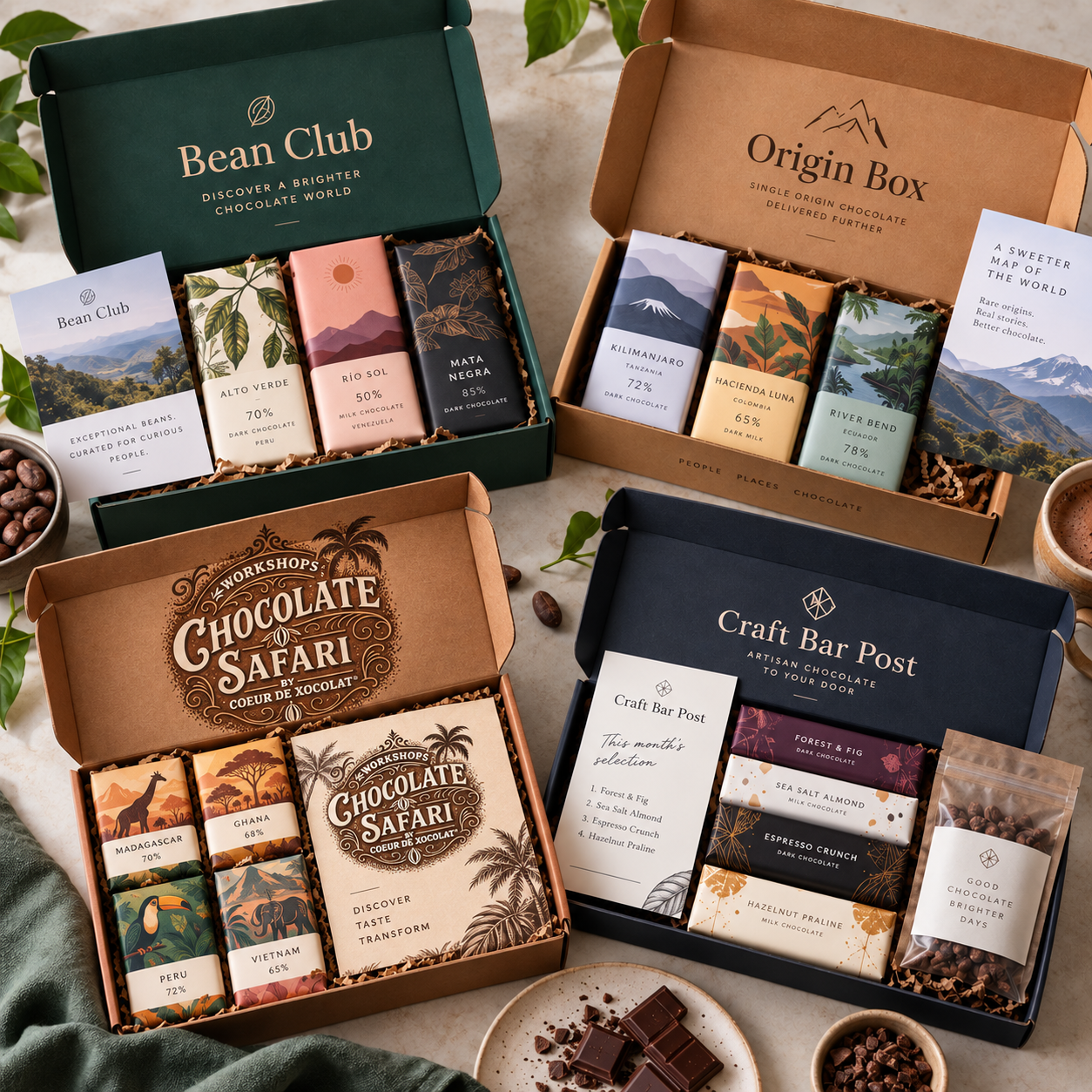
Divine Chocolate has now introduced subscriptions through its own website. Customers can choose their chocolate and have it delivered every one, two or three months, receiving a 10% discount and free delivery. Subscribers can also pause, skip or cancel their deliveries.
On the face of it, that is simply a convenient way of making sure you never run out of chocolate.
I think it says something rather bigger, It’s another chocolate company saying:
Why shouldn't we build a continuing relationship directly with the people who eat our chocolate?
And for the craft chocolate sector, that question is important.
Cocoa Runners Has Already Proved There Is an Audience they deserve considerable credit for demonstrating that British consumers will subscribe to craft chocolate.
It began as a subscription business and today its club sends subscribers four selected craft chocolate bars each month alongside tasting information. Cocoa Runners says it has sent more than 500 different monthly boxes over its history and has subsequently expanded into retail, tastings, gifting and wholesale.
That tells us something important, here is a consumer willing to pay regularly to discover better chocolate.
People are interested in origin, interested in makers, they want to understand flavour.
They will pay considerably more than supermarket chocolate prices for something they perceive to have craftsmanship, provenance and a story behind it, that is good news for every craft chocolate maker.
But there is another side to the model.
Who Owns the Customer?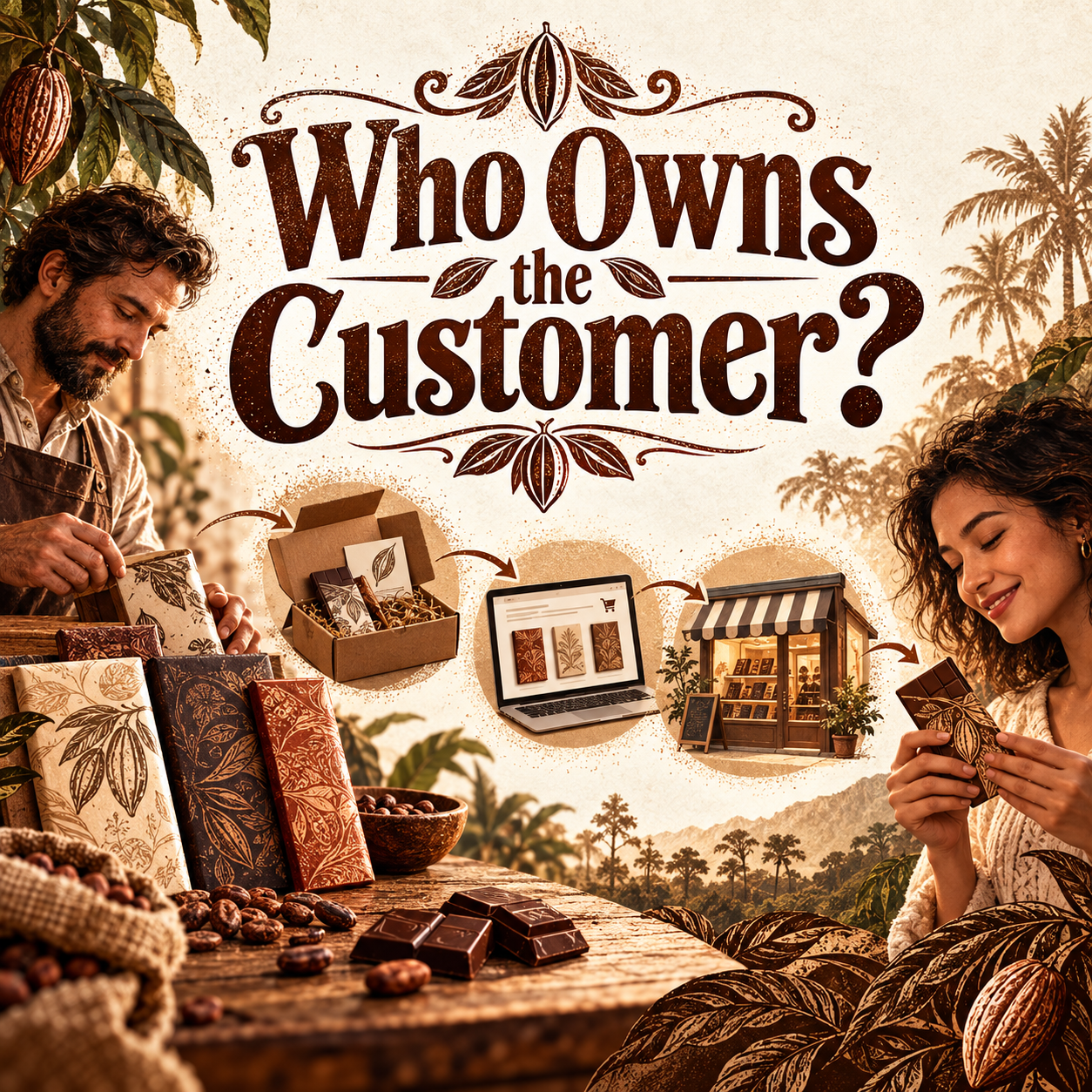
This is where things become more complicated.
Curators and specialist retailers perform a useful job.
They find chocolate, taste it, select it, market it, explain it, package it and introduce consumers to makers they might otherwise never discover.
None of that is free.
The problem comes when the independent maker becomes permanently dependent upon that intermediary.
The maker supplies the chocolate.
The intermediary has the mailing list.
The intermediary processes the payment.
The intermediary decides what appears in the box.
The intermediary communicates with the customer.
And ultimately the consumer may remember the subscription service more strongly than the person who actually made the chocolate.
That is not a criticism unique to chocolate.
It is the classic problem of almost every marketplace.
Amazon has the customer.
Booking platforms have the traveller.
Food delivery platforms have the diner.
Retailers have the shopper.
The producer provides the product but somebody else increasingly controls access to the consumer.
For craft chocolate, where margins are already tight, that deserves serious thought.
Could craft makers use subscription themselves rather than relying entirely upon somebody else's subscription?
I think they can.
From Wholesale to Relationship
The traditional route might look something like this:
Cacao producer → chocolate maker → distributor → retailer → consumer
A direct subscription can shorten that dramatically:
Cacao producer → chocolate maker → consumer
This isn't only about removing somebody's margin, it completely changes the relationship.
If I buy a bar from a supermarket shelf, the maker may know virtually nothing about me. (Unless they buy the data from the retailer)
If I subscribe directly to a maker, they know that I like their chocolate enough to want another delivery.
That means they can tell me when the next harvest arrives.
They can introduce a new origin, offer me an experimental roast and invite me to an online tasting.
They can show me the farmer who grew the cacao, and, importantly, they can ask what I thought.
The transaction becomes a relationship.
For small makers, that relationship can be enormously valuable.
Predictability Might Be Just as Important as Margin
Cash flow is one of the least glamorous subjects in chocolate, but perhaps one of the most important.
Small manufacturers frequently have to buy cocoa beans, packaging and ingredients long before they know exactly how much finished chocolate they will sell.
A subscription gives the maker something incredibly useful:
a degree of predictable demand.
Imagine a maker with 300 subscribers receiving three bars every eight weeks.
That maker already knows that the next production cycle requires roughly:
300 subscribers × 3 bars = 900 bars.
Over six deliveries:
900 × 6 = 5,400 bars a year.
That does not replace wholesale, markets or retail.
But it creates a dependable core around which the rest of the business can operate.
For a very small maker, that could matter enormously.
Subscription Doesn’t Have to Mean 'A Box Every Month'
This is where I think the industry needs to be more imaginative.
Subscription has become almost synonymous with a box arriving every month.
Why?
Chocolate isn’t razor blades, consumers don't necessarily need four large bars every four weeks.
Too much product can actually create subscription fatigue.
For craft chocolate I would suggest models designed around discovery rather than replenishment.
Perhaps:
Three bars every six weeks.
Or:One new origin every two months.
Or: Four harvest releases each year.
Or: A quarterly maker's box.
The frequency should follow the chocolate, not the software running the subscription.
Imagine a Harvest Subscription
This is particularly exciting for makers working directly with cacao producers.
Instead of:
January Box, February Box, March Box
we might have:
Main Harvest Release
A bar produced from the main crop.
Then:
Mid-Crop Release
Same farm. Different harvest.
Then perhaps:
Experimental Fermentation
Same cacao. Different fermentation protocol.
Now the subscriber begins to understand something that wine drinkers have understood for generations: agricultural products change.
Chocolate isn't simply a recipe, cacao is farming.
Season, genetics, fermentation, drying and roasting all matter.
A subscription allows the maker to demonstrate that over time.
A supermarket shelf struggles to.
It Creates Space for Experimentation
One of the problems for very small chocolate makers is experimentation.
Imagine developing an unusual bar.
Perhaps:
cacao and smoked salt,
a different fermentation,
a high-percentage dark milk, a local botanical, or a tiny batch of exceptional beans.
You may only have enough cacao for 300 bars.
That makes conventional distribution difficult.
But if you already have 250 subscribers?
You've practically sold the batch before you've wrapped it.
Subscribers can become a tasting panel.
Experimental Batch No. 17
Scan the QR code. Taste. Score it.
Tell us whether you want it again.
Suddenly research and development becomes part of the customer experience.
And Origin Makers Could Benefit Most
Check out Lynn Bishop Quetzalcacao in Panama
This is where I see perhaps the greatest opportunity.
We talk endlessly about adding value at origin.
But making chocolate at origin is only half the challenge.
The second half is:
Who is going to buy it?
A Ghanaian, Togolese, São Toméan, Ugandan Panamanian or Madagascan maker can produce an excellent bar and still struggle to reach customers in Britain.
They encounter logistics. Importation. Retail margins. Distributor margins. Shelf space. Marketing budgets. Brand recognition.
And sometimes the uncomfortable reality that European chocolate is automatically assumed to be more premium than chocolate made in the country where the cacao actually grew.
Subscription could offer another route.
Imagine subscribing directly to a maker in Ghana.
Every two months you receive a small shipment.
But alongside the chocolate you receive a QR code.
You meet the farmer.
You see the fermentation, meet the maker, and taste along with them.
The next delivery arrives from the new harvest.
Now the consumer isn’t only buying African cocoa disguised inside a European chocolate brand.
They are buying African chocolate from an African chocolate maker.
Perhaps We Need Platforms, Not Gatekeepers
There is still a problem.
Not every small chocolate maker can build a sophisticated subscription website, manage fulfilment, process recurring payments, create marketing campaigns and answer customer emails.
So there is still a role for somebody in the middle.
But perhaps we need to rethink what that role looks like.
Instead of: We buy your chocolate and resell it.
What if the proposition became:
We provide the infrastructure that allows you to sell directly.
The platform could provide:
payment processing, fulfilment, subscription management, postal logistics,
customer service technology, tasting templates,
QR storytelling, and perhaps consolidated international shipping.
But the maker remains visible, their branding remains visible.
Their story remains visible.
And wherever legally and practically possible, the relationship with the consumer remains theirs.
The platform earns a transparent service fee.
That feels very different from a traditional wholesale relationship.
Craft Chocolate's Greatest Asset Is Its Story
Industrial chocolate is very good at convenience, craft chocolate will never beat it on price, and it shouldn't try.
Its advantage is somewhere else.
Craft chocolate can tell you:
where the cacao grew, who grew it, how its fermented, who roasted it, and why that roast was chosen,
what the maker was trying to achieve, and why this particular chocolate tastes different from another bar grown 500 miles away.
But that story needs space.
A supermarket shelf gives you perhaps three seconds, where a subscription gives you months.
That may prove incredibly valuable.
Divine's Move Is Worth Watching
Divine's model is different from a curated craft chocolate club.
Its subscription proposition currently revolves around repeat purchases of its own products, with customers selecting chocolate and choosing delivery every one, two or three months. Subscribers receive 10% off, free delivery and flexible management of their subscription.
But strategically, the principle is significant.
Divine is strengthening the direct relationship between brand and consumer.
For craft makers watching from the sidelines, the lesson isn't necessarily:
Copy Divine, or is it copy Cocoa Runners.
It's:
Look seriously at recurring direct-to-consumer relationships.
Because the technology that once made subscriptions difficult is now widely available.
The Opportunity
I think the next stage of craft chocolate could involve several models operating together:
Retail for discovery.
Wholesale for reach.
Chocolate shops for expertise.
Markets and festivals for human contact.
Online stores for convenience.
And subscriptions for relationship.
No single route replaces the others.
But for a small maker struggling to keep enough of the retail price to build a sustainable business, subscriptions deserve serious consideration.
The challenge will be resisting the temptation to recreate exactly the system craft chocolate wanted to escape.
If we simply create another powerful intermediary who controls which makers gain access to consumers, we have moved the gatekeeper rather than removed it.
The more interesting model is one where technology helps the maker stand closer to the person eating their chocolate.
And perhaps that is where craft chocolate ought to be heading.
Not: bean to bar. But: bean to bar to person.