
Before Starbucks Had a Mermaid (London Had Cocoa)
Let’s get the obvious question out of the way.
Did Starbucks get its idea from Lockhart’s Cocoa Rooms?
No, almost certainly not buthey may have known this story.
There is no memo, no lineage chart, no dusty ledger revealing a Victorian cocoa-room epiphany later rediscovered in Seattle.
But if you dropped a modern, tattooed barista into a Lockhart’s Cocoa Room in 1895, they would know exactly what was going on even if they’d be baffled by the lack of oat milk.
This isn’t a story of copying, but it is a story of recognition.
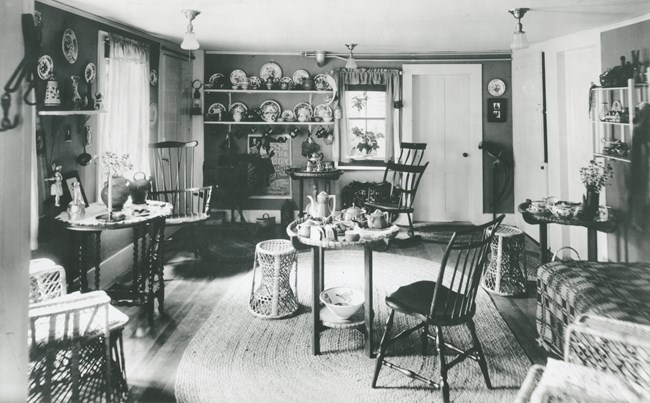
Imagine it, you push open the door, the room is bright, orderly, warm.
No alcohol. No preacher. No pulpit. No hymns.
Just hot drinks, food you can afford, and tables designed for sitting rather than fleeing.
Nobody rushes you.
Nobody moralises at you.
And nobody looks surprised when you come back tomorrow.
You know what you’re getting and how much it costs before you order.
The cup looks exactly like the last one.
The price hasn’t changed.
Each branch feels reassuringly interchangeable with the one you visited across town last week.
If this sounds suspiciously modern, that’s because it is.
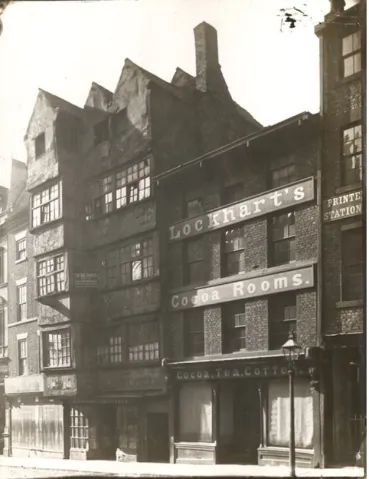 Lockhart’s Cocoa Rooms were doing something quietly radical: selling familiarity at scale.
No green mermaid.
No loyalty app.
But the tokens? Yes a Victorian version of the same instinct: make people feel safe enough to stay.
Lockhart’s Cocoa Rooms: Born in Liverpool, Weaponised in London
Lockhart’s Cocoa Rooms began life in Liverpool in 1875, where the company was formally incorporated. Liverpool was the hard-nosed port city where ideas were tested against reality. London was where those ideas were rolled out, repeated, and normalised.
Lockhart’s wasn’t a sentimental London experiment or a philanthropic indulgence. It was a commercially disciplined temperance business, designed to survive contact with hard-nosed working men who had better things to do than be preached at.
From the 1870s through to the early 1920s, Lockhart’s operated as commercial temperance refreshment houses offering:
Cocoa
Tea and coffee
Aerated drinks
Simple, affordable food
They were aimed squarely at working-class men the demographic that terrified temperance reformers and kept pub owners rich.
Earlier cocoa houses often failed because they were earnest, pious, or vaguely embarrassed by the need to make money. Lockhart’s succeeded because it understood a brutal truth:
If sobriety isn’t convenient, it won’t be chosen.
The Chain Café Before We Had the Language for It
Lockhart’s didn’t invent cocoa, temperance, or social reform, what they did invent or at least perfect was repeatability.
Standardised premises
Recognisable branding
Uniform, branded crockery
Predictable pricing
Long opening hours
Professional management
This wasn’t accidental. It was deliberate, Victorian social reformers had learned the hard way that moral pressure alone achieved very little. If you wanted to reduce drinking, you needed somewhere else for people to go.
Somewhere warm, respectable, somewhere boring enough to be safe and interesting enough to return to.
Lockhart’s wasn’t asking people to be virtuous, it was asking them to sit down chat and be present.
 Cocoa as Social Engineering
Cocoa mattered here not for pure indulgence, but as infrastructure.
It was warm, filling, mildly nourishing, affordable, and, crucially, morally acceptable.
Cocoa didn’t ask questions. Cocoa didn’t judge. Cocoa didn’t slur its words or empty your pockets.
Each branch typically employed a manager, a cook, and several waitresses. Supervision was tight.
Respectability wasn’t enforced through sermons, but through lighting, cleanliness, and routine.
Temperance wasn’t preached here it was designed.
And then there was the token.
Lockhart’s issued penny-value metal tokens redeemable at any branch, an early loyalty scheme cross-city, frictionless, and utterly modern in its thinking.
Come back.
Bring a friend.
Spend again.
No app required.
Census records even show internal promotion, managers rose through the system, this wasn’t a charitable stopgap it was a functioning hospitality employer with hierarchy, discipline, and career paths.
So… About Starbucks
No, Starbucks did not steal the idea.
But they are playing the same tune, in a different key, a century later.
Both models answer the same question:
Where can people gather without alcohol, without obligation, and without being moved on?
Lockhart’s answered it with cocoa and restraint.
Starbucks answers it with coffee and indulgence.
Different drinks.
Different moral economies.
Same architectural instinct.
What we now call the “third place” didn’t spring fully formed from late-20th-century branding theory. London had already built it quietly, methodically, and with far less fuss using cocoa as the glue.
Lockhart’s Cocoa Rooms remind us that Britain’s chocolate history isn’t only about bars, boxes, and bonbons.
It’s about drink.
About labour.
About urban life.
About controlling chaos without calling it control.
They show us that:
Cocoa once competed seriously with coffee
Chains existed long before franchising language did
Hospitality has always been political whether it admits it or not
So no, Starbucks didn’t get the idea here.
But the next time you sit in a familiar room, holding a hot drink in a branded cup, surrounded by strangers doing exactly the same thing in hundreds of other locations, remember this:
London had already figured it out.
They just did it with cocoa, penny tokens, and the quiet confidence that if you build the room properly, people will behave themselves inside it.
And that is why Lockhart’s Cocoa Rooms belong firmly and unapologetically on this safari.