
Walk into any decent chocolate shop and sooner or later you’ll see the numbers.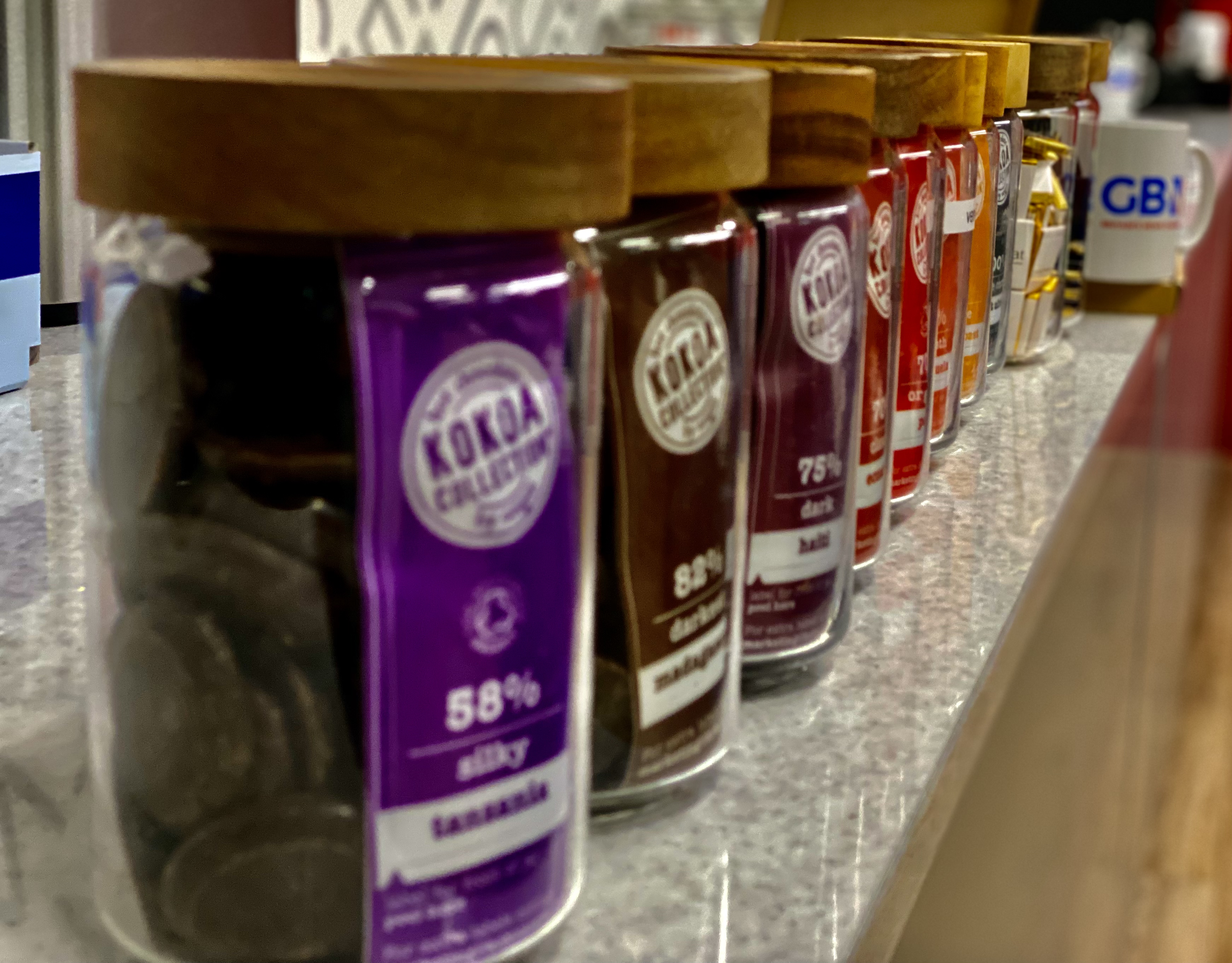
70%. 72%. 85%. 100%.
Big, confident numbers. The sort that make you feel you ought to know what they mean.
And somewhere along the line, we started treating those percentages like exam results.
85%? Serious chocolate.
70%? Respectable.
Milk and white chocolate? apparently for children that is nonsense.
The percentage on a chocolate bar tells you something useful.
It just doesn’t tell you nearly as much as people think.
So what does 70% actually mean?
In simple terms, it means that around 70% of that chocolate is made from cocoa-derived ingredients.
That may include cocoa mass, sometimes called cocoa liquor, and added cocoa butter.
The rest will usually be sugar and, depending on the style of chocolate, milk ingredients and other permitted ingredients.
That sounds straightforward.
It isn’t.
Two chocolate makers can both produce a 70% bar and end up with chocolates that taste completely different.
One might be sharp and fruity the other might be dark, nutty and roasted, one might melt beautifully another might sit on the tongue like candle wax.
Same number but very different chocolate.
Cocoa mass and cocoa butter are not the same thing
This is where things get interesting cocoa mass is what you get when roasted cocoa nibs are ground down. It contains both cocoa solids and the natural cocoa butter from the bean.
Cocoa butter is the fat.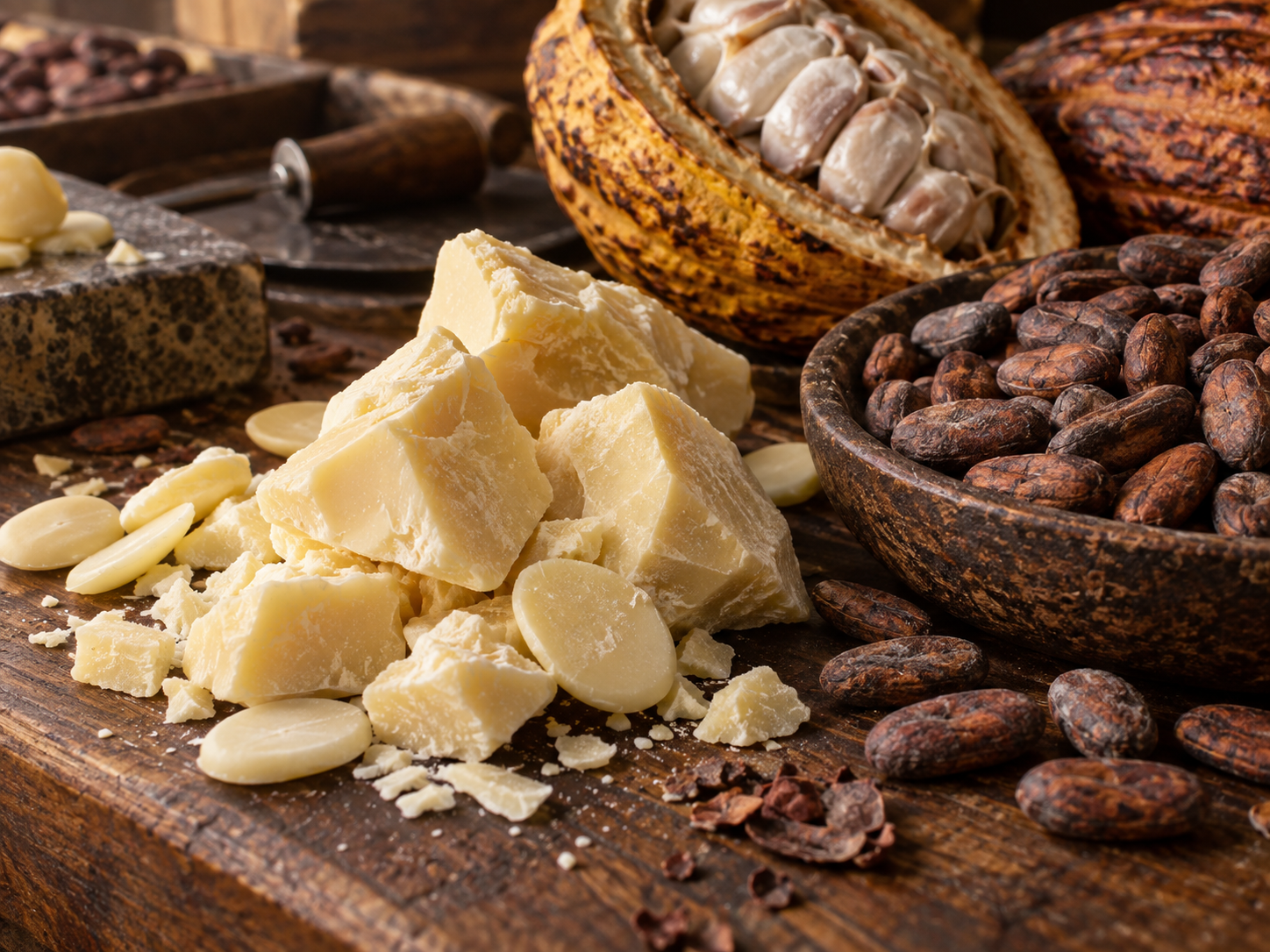
It gives chocolate much of its texture, its gloss, its snap and that wonderful moment when something solid suddenly starts disappearing in your mouth.
A chocolate maker can add extra cocoa butter.
So when the wrapper says 70%, that number does not tell you exactly how much came from cocoa mass and how much came from extra cocoa butter.
The percentage is useful.
The ingredients list is often more revealing, higher percentage doesn’t mean better chocolate
This is the myth worth killing off an 85% chocolate isn’t automatically better than a 70% or 70% isn’t automatically better than a 55%.
And a 100% bar doesn’t earn you a medal for bravery.
Percentage tells you about composition.
Quality comes from somewhere else, it comes from the cacao itself.
Where it was grown and how it was fermented and dried how carefully it was roasted.
How well the maker understood the bean.
And whether anybody along the way actually cared about flavour.
You can make mediocre chocolate at 85% you can make something extraordinary at 65%.
The number isn't a certificate of quality.
Why does higher-percentage chocolate usually taste less sweet?
Because there is usually less room for sugar, if more of the recipe is cocoa derived ingredients, then, in a simple dark chocolate recipe, there is generally less space left for sugar.
That doesn’t mean the chocolate has to be bitter, good cacao can give you fruit, flowers, nuts, spice, caramel, wood, tobacco.
Sometimes flavours you would swear had been added, even though they came entirely from the bean.
Bitterness is only one voice in the room good chocolate has a whole conversation going on.
What percentage should dark chocolate be?
There is no magic number.I often enjoy chocolate somewhere around 65–75% because there can be enough sweetness to balance the cacao while still allowing the bean to speak clearly but that is my preference not a law.
Some 55% chocolates are excellent, Some 90% chocolates are beautifully balanced.
even 100% bars can be fascinating and others are hard work.
The sensible approach is simple.
Taste the chocolate forget the macho nonsense about the highest percentage winning.
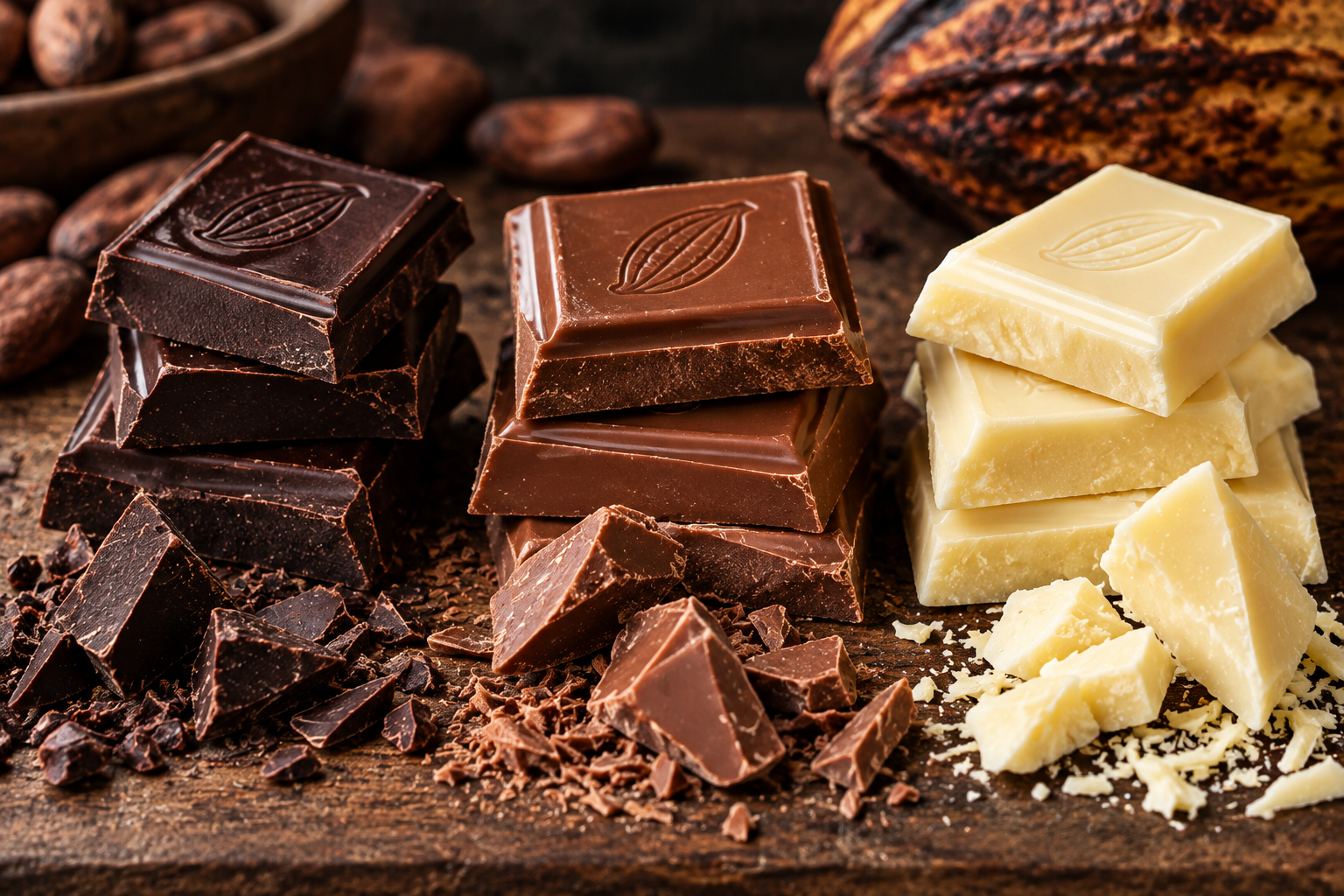 What about milk chocolate?
Milk chocolate gets treated badly by people who want chocolate to look serious It shouldn’t.
Good milk chocolate can be magnificent creamy, caramel-like, nutty, soft and deeply chocolatey.
Under the rules applying in England, standard milk chocolate must contain at least 20% total dry cocoa solids, alongside the required milk ingredients.
That is a legal minimum it isn't a recommendation.
Some modern milk chocolates use far more cocoa and can deliver plenty of flavour while retaining the richness that milk brings.
A good high-cocoa milk chocolate can change the mind of someone who thought milk chocolate meant cheap and sugary.
And white chocolate?
White chocolate gets even more abuse some people say it isn’t chocolate.
It is.
It simply uses cocoa butter rather than the darker non-fat cocoa solids.
Under the regulations in England, white chocolate must contain at least 20% cocoa butter, along with specified levels of milk solids and milk fat.
And the quality of that cocoa butter matters, good white chocolate should have a clean melt, dairy richness and the aroma of cocoa butter.
Bad white chocolate is just sweet.
There is a difference.
Is 70% always less sugary than 60%?
Usually, in a simple dark chocolate recipe.
But again, read the label.
Chocolate is formulation.
Different makers use different proportions of cocoa mass, cocoa butter and sugar.
The front of the wrapper gives you the headline.
The ingredients list gives you some of the detail.
And your mouth gives you the final verdict.
What percentage should you cook with?
That depends on what you are making, there is no universal answer.
A chocolate that works brilliantly in a ganache might overpower a mousse.
A very dark chocolate might be excellent in a sauce but leave a brownie dry and aggressive if the recipe was designed around something sweeter.
Around 60–70% is often a useful working range for desserts.
For savoury food, very dark chocolate or even 100% chocolate can be superb because you get cacao flavour without bringing a bucket of sugar along with it.
The important thing is to cook with the chocolate you actually have.
Not the percentage you wish it were.
So what should you look for?
Start with the percentage then keep going read the ingredients look for the origin find out who made it.
Break off a piece, listen to the snap, smell it, let it melt and pay attention.
That will tell you far more than standing in a shop staring at a large number printed on a wrapper.
The number is only the beginning chocolate percentage is useful but it's not the whole story.
It cannot tell you whether the cacao was well fermented or tell you whether the roast was handled carefully.
It cannot tell you whether the farmer was paid properly.
It cannot tell you whether the maker understood the bean.
And it certainly cannot tell you whether you are going to enjoy eating it.
So if somebody tells you that 85% is automatically better than 70%, there is only one sensible response.
Taste both then decide.
Chocolate belongs in the mouth, not on a spreadsheet.