
If you’ve ever dipped a spoon into a jar of chocolate-hazelnut spread and wondered where this glorious combination began, the answer lies in gianduja one of the most important 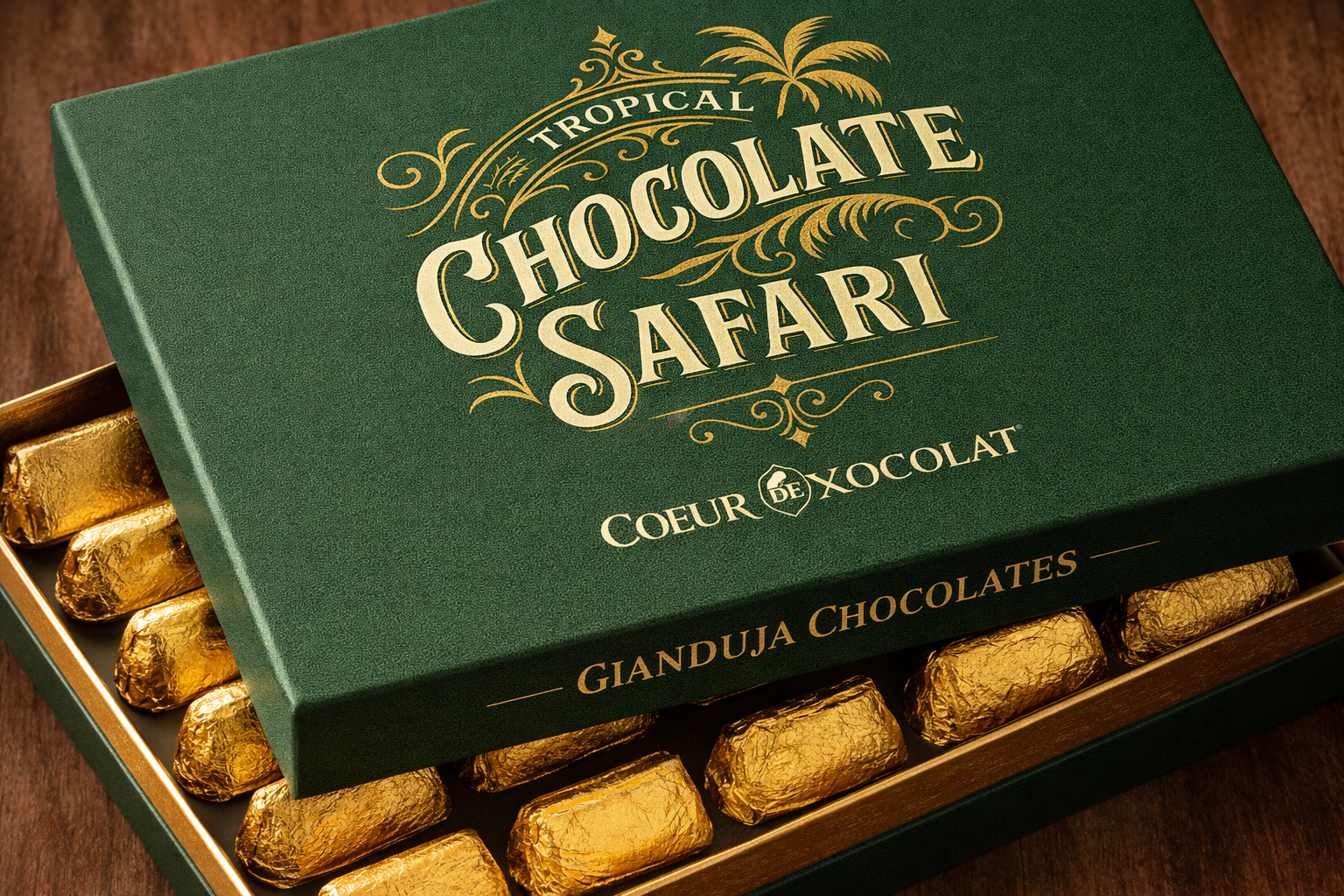 inventions in the history of chocolate.
Long before supermarket spreads appeared on shelves, Italian chocolatiers had already perfected the art of blending roasted hazelnuts with chocolate to create a smooth, aromatic confection that melts beautifully on the tongue.
Gianduja chocolate is the ancestor of modern chocolate spreads, but it remains a refined ingredient in its own right, beloved by pastry chefs, chocolatiers, and serious chocolate lovers across the world.
For anyone fascinated by chocolate history, gianduja marks a remarkable moment the point when nuts and cocoa found perfect harmony.
A Chocolate Born from Hard Times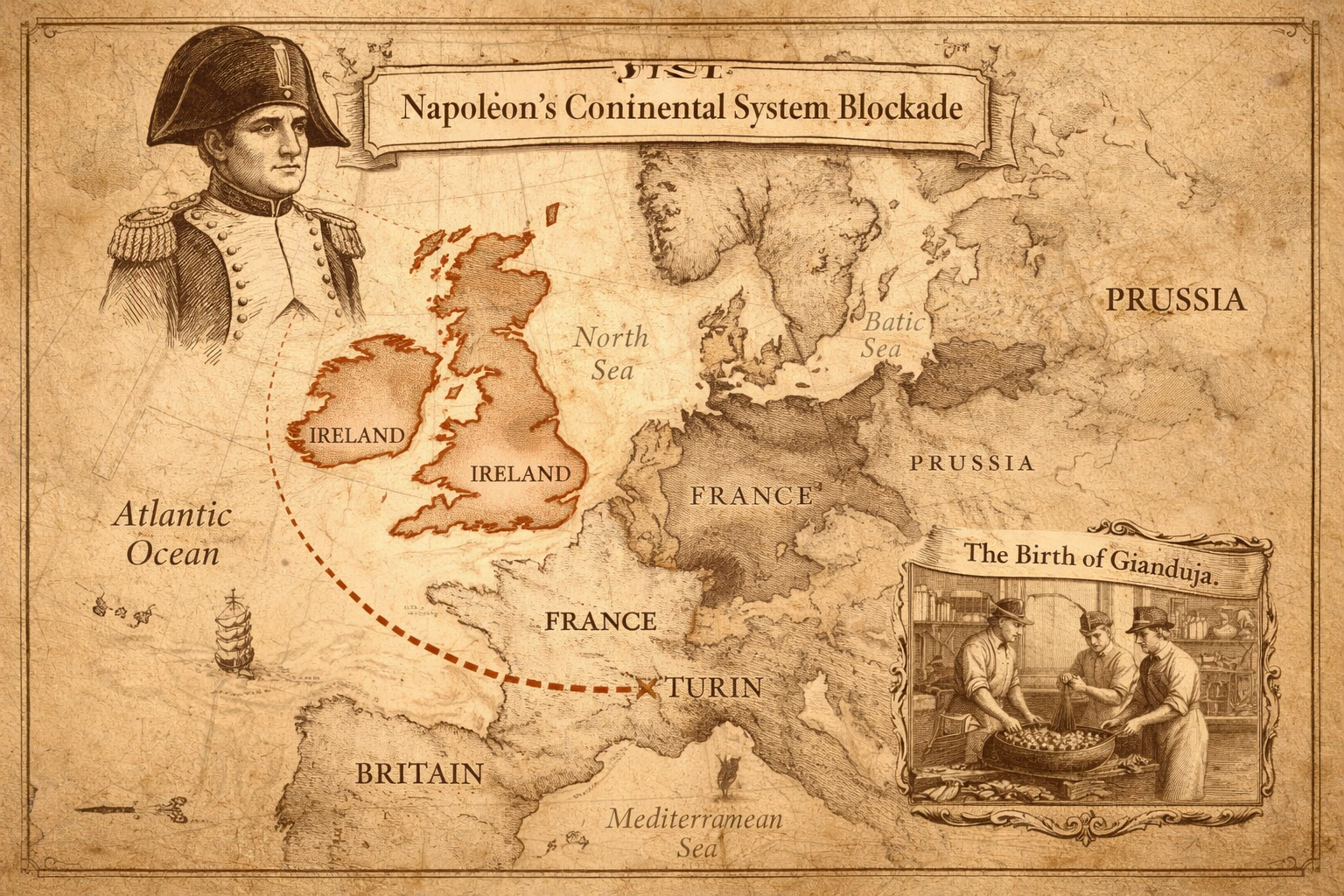
Gianduja comes from Piedmont in northern Italy, particularly the city of Turin, a place with a deep and proud chocolate heritage.
Its creation dates back to the early 19th century, during the Napoleonic trade blockades.
At the time, cocoa had become scarce and expensive because imports across Europe were restricted. Italian chocolatiers faced a difficult question:
How could they continue making chocolate when cocoa supplies were limited?
The answer was growing in the hills surrounding Turin.
Piedmont produces some of the finest hazelnuts in the world, particularly the famous Tonda Gentile delle Langhe variety. These hazelnuts are prized for their delicate aroma, high natural oil content, and exceptional sweetness once roasted.
Local chocolatiers began blending finely ground hazelnuts into chocolate in order to stretch their cocoa supply.
What began as a practical solution quickly turned into something extraordinary.
The hazelnuts added richness, fragrance, and a silky texture that pure chocolate alone could not achieve.
A new confection had been born.
One of the early producers associated with gianduja was the historic Turin chocolate house Caffarel, which helped popularise this style of chocolate during the 19th century.
The name itself comes from Gianduja, a cheerful folk character from Piedmontese theatre who symbolised the spirit and generosity of the region.
Today, Turin remains one of Europe’s great chocolate cities, and gianduja is still one of its most famous creations.
 What Exactly Is Gianduja Chocolate?
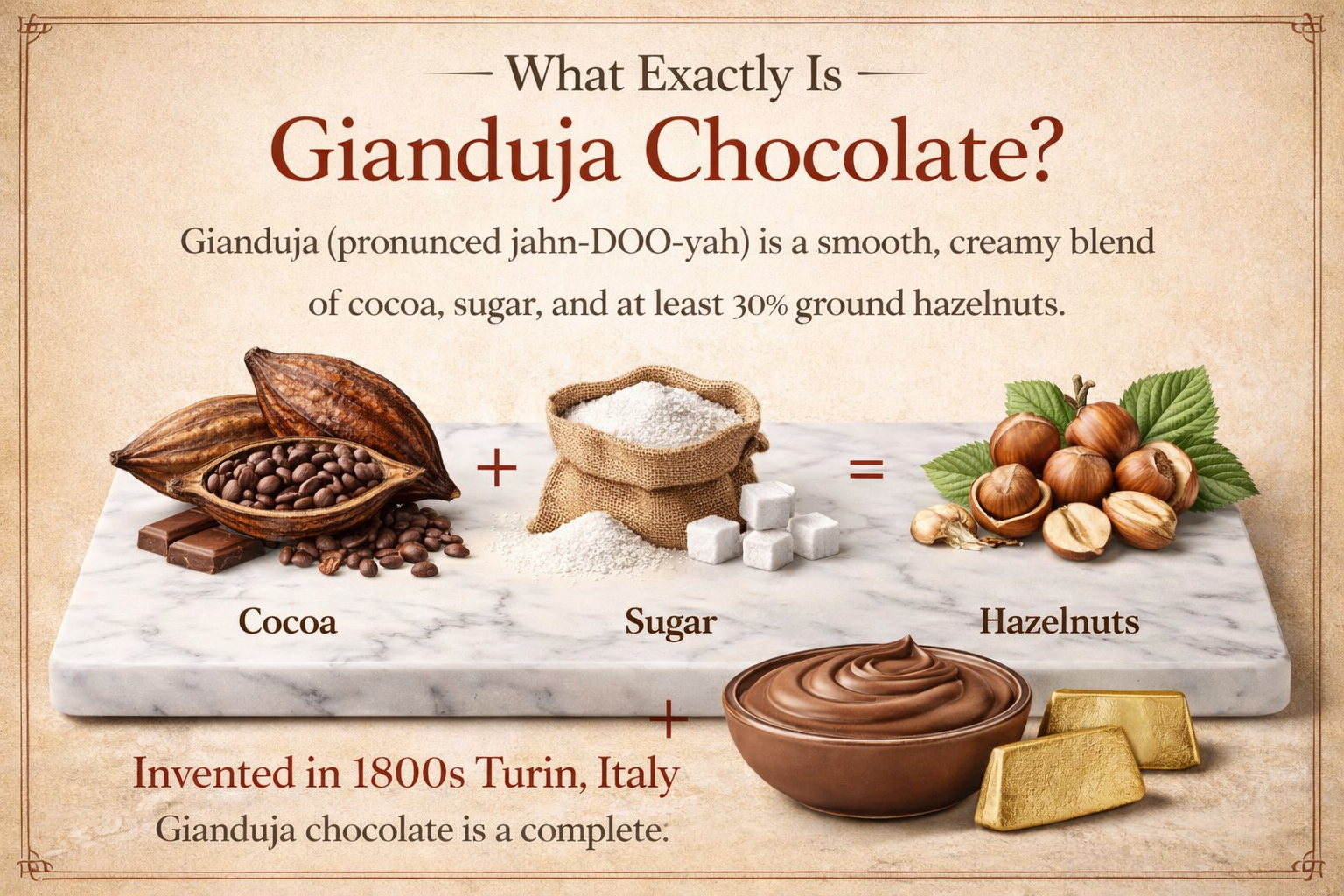
At its heart, gianduja chocolate is beautifully simple.
It is traditionally made from:
• roasted hazelnuts
• chocolate
• sugar
• sometimes cocoa butter for texture
The hazelnuts are ground into an ultra-smooth paste and blended with chocolate until the mixture becomes silky and creamy.
What makes gianduja special is the high proportion of nuts.
Traditional recipes contain a generous percentage of hazelnuts, giving the chocolate a deeply nutty aroma and luxurious melt.
Unlike many commercial chocolate spreads, classic gianduja does not rely on vegetable oils to achieve its texture.
Instead, the natural oils in hazelnuts combined with cocoa butter provide all the richness needed.
The result is a chocolate that is softer, more aromatic, and wonderfully smooth.
The Famous Gianduiotto Chocolate
Perhaps the most elegant expression of gianduja is the gianduiotto.
These small ingot-shaped chocolates were first produced in Turin in the 19th century and are still wrapped in shimmering gold foil today.
Their distinctive shape resembles a small boat or gold bar a nod to the prosperity that chocolate once symbolised.
When you bite into a gianduiotto chocolate, the texture is almost impossibly smooth.
It melts slowly, releasing layers of toasted hazelnut, cocoa, and gentle caramel sweetness.
It is one of those chocolates that makes people pause mid-conversation.
My First Taste of real Gianduja
I still remember the first time I tasted proper gianduja. It wasn’t in a boutique chocolate shop or from a jar on a supermarket shelf.
It was in a chocolate factory in Tours, France.
Factories have a particular atmosphere. There is always a quiet rhythm to them the steady turning of machines, trays of chocolate moving from one station to another, and that unmistakable aroma that comes from freshly roasted hazelnuts and cocoa.
Someone broke off a small piece of gianduja from a larger block and handed it to me.
At first glance it looked fairly ordinary, but the moment it touched the tongue everything changed
The texture was softer than a typical chocolate bar, it melted almost instantly, releasing the warmth of roasted hazelnuts followed by the rounded depth of cocoa.
The flavour was gentle but incredibly rich hazelnut first, then chocolate, then a lingering sweetness that settled slowly across the palate.
It was chocolate, certainly but it was also something else entirely, that moment is when I understand why gianduja has survived for more than two centuries.
Gianduja vs Chocolate Spread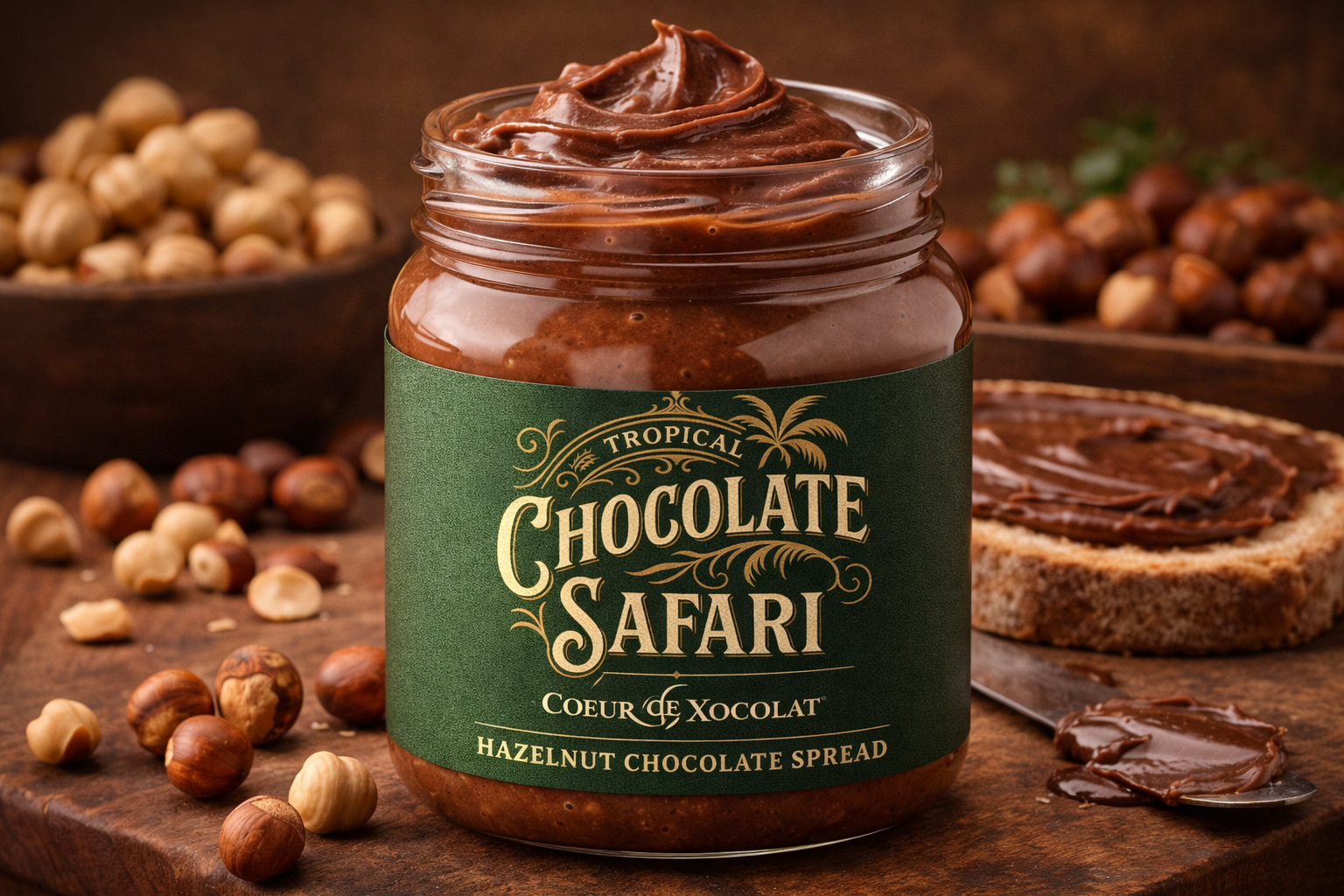
Many people associate gianduja with chocolate spreads, but they are not quite the same thing.
Modern spreads evolved from the gianduja tradition but use very different formulations designed for industrial production.
Classic gianduja usually contains far more hazelnut and relies on cocoa butter rather than vegetable oils for its texture.
Because of this, it can be:
• moulded into chocolates
• layered into desserts
• piped into pastries
• softened into a luxurious spread
Think of gianduja as the artisan ancestor, while modern chocolate spreads are the industrial descendants.
Why Pastry Chefs Love Gianduja
In the pastry kitchen, gianduja is incredibly versatile.
You’ll find it used in:
• chocolate truffles
• praline fillings
• layer cakes
• ice cream and gelato
• chocolate bars
• viennoiserie and pastries
Because hazelnuts naturally complement cocoa, gianduja adds depth without overwhelming the chocolate.
For chocolatiers it also provides a wonderful textural advantage.
It melts at a slightly lower temperature than pure chocolate, creating a luxurious mouthfeel in filled chocolates and pralines.
Modern Variations of Gianduja
While hazelnut gianduja is the classic version, modern chocolatiers love to experiment.
Common variations include:
• Almond giandujalighter and more delicate
• Pistachio gianduja intensely aromatic and slightly savoury
• Dark chocolate gianduja deeper cocoa flavour
• White chocolate gianduja creamy and buttery
At Coeur de Xocolat, exploring variations like these is part of the joy of chocolate making.
Different nuts, roast profiles, and cacao origins can dramatically change the flavour.
Gianduja becomes a playground for flavour.
How to Make Gianduja at Home
The good news is that gianduja is surprisingly easy to make at home.
You simply need:
• roasted hazelnuts
• good quality chocolate
• a powerful blender or food processor
Blend the hazelnuts into a smooth paste, then mix them with melted chocolate and refine until silky.
The trick is patience.
Grinding the nuts properly is what gives gianduja its characteristic smoothness.
And once you taste homemade gianduja, you may never look at supermarket chocolate spreads in quite the same way again.
Chef’s Tip: A Simple Gianduja Ratio
If you want to try making gianduja yourself, this simple balance works beautifully.
Basic Gianduja Formula
• 300 g roasted hazelnuts
• 200 g dark or milk chocolate
• 50 g icing sugar (optional)
• 20 g cocoa butter (optional)
Blend the hazelnuts until they release their oils and become a smooth paste, then combine with melted chocolate and mix until silky.
Pour into a tray to set or keep soft in a jar.
Spread it on warm toast, pipe it into pastries…
Or simply do what most chocolatiers secretly do.
Eat it with a spoon
A Taste of Chocolate History
Gianduja reminds us that many great foods are born from creativity and necessity.
A cocoa shortage in 19th-century Turin forced chocolatiers to think differently.
Instead of weakening chocolate, hazelnuts transformed it into something even more delicious.
Two centuries later, that simple idea still delights chocolate lovers around the world.
And sometimes the best way to enjoy gianduja is the simplest way of all:
A spoon, a jar, and a quiet moment to enjoy it.