
Chocolate is a pleasure. Great chocolate is an experience.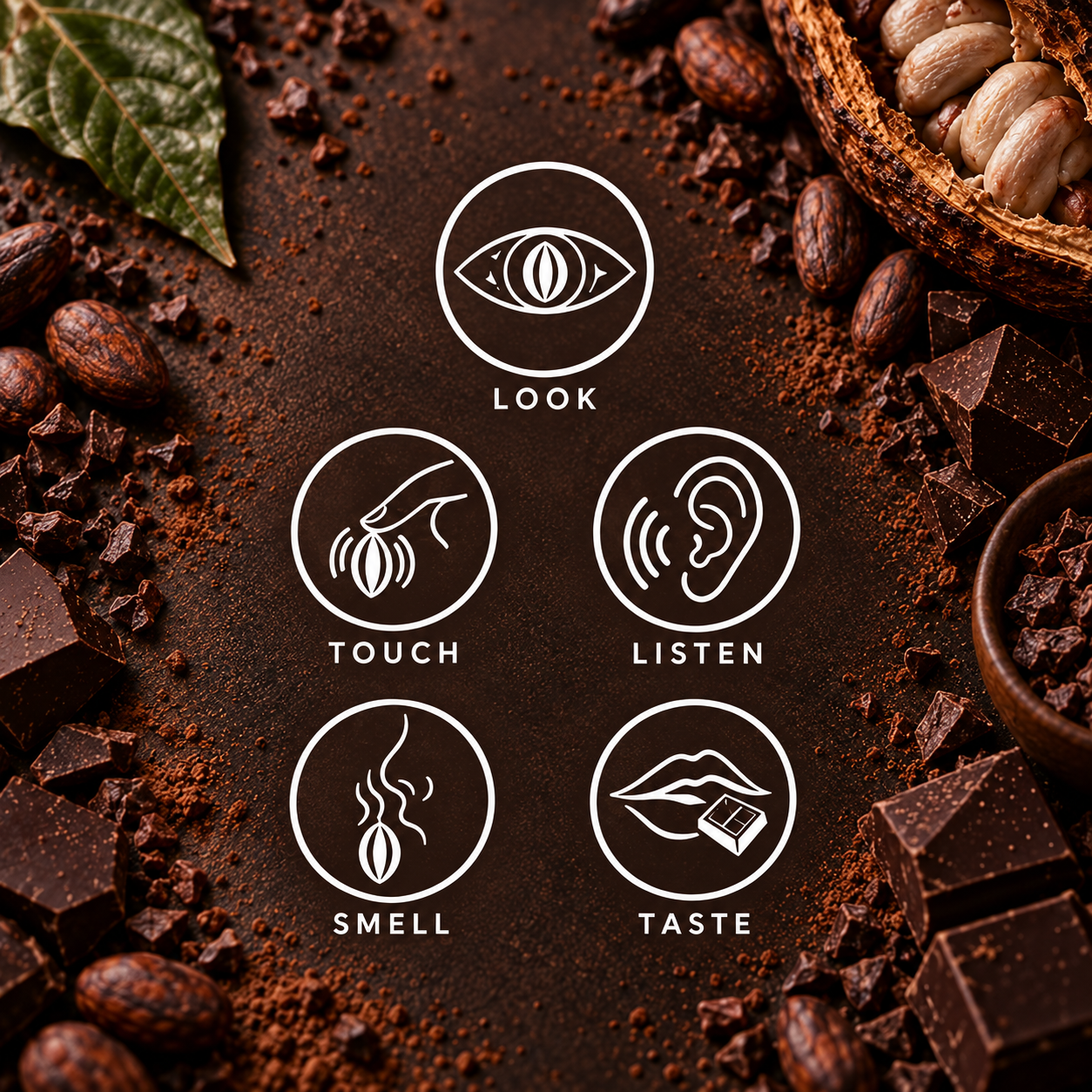
When most people eat chocolate, they bite, chew and swallow but when a professional chocolatier or chocolate judge tastes it, we slow everything down.
We look. We touch. We listen. We smell. And finally, we taste.
Chocolate can reveal fruit, flowers, nuts, caramel, spice, wood, earth and roasted notes alongside sweetness, acidity, bitterness and astringency.
I’m David Greenwood-Haigh, an award-winning chef, chocolatier, chocolate judge and international chocolate consultant. I’ve tasted chocolate and cacao around the world, from cocoa-growing communities to international chocolate competitions.
Here is the method I use to help people stop simply eating chocolate and start experiencing it.
Before You Start Your Chocolate Tasting
Choose somewhere reasonably quiet and free from strong smells.
Perfume, cooking aromas, scented candles, coffee and cigarette smoke can all make it harder to concentrate on the chocolate's aroma.
Have some room-temperature water available and, if you are tasting several chocolates, allow a little time between samples.
Don't rush.
One small piece of chocolate can tell you far more when you give it your full attention.
If you are comparing several chocolates, start with the mildest and work towards stronger or darker styles.
Now we can begin.
 1. LOOK What Does the Chocolate Tell You?
Before opening a new chocolate bar, look at its wrapper.
Notice the: country or region of origin
cocoa percentage,ingredients, maker, information about the cacao
These clues won't tell you whether you will like the chocolate, but they can help you understand what you are tasting.
Now unwrap it and take a proper look. Chocolate is never simply “brown”.
Depending on the recipe, cacao, processing and ingredients, you may see shades ranging from creamy ivory through reddish and mahogany tones to very deep brown.
Look at the Surface Is it glossy or matt? Is the moulding clean?
Are there bubbles, marks or streaks? A properly tempered moulded chocolate will generally have an attractive surface and good structure, although appearance alone cannot tell you whether a chocolate will taste good. You might also notice a pale or whitish coating known as chocolate bloom.
There are two principal types: fat bloom and sugar bloom. Fat bloom involves changes or movement within the fat in the chocolate, while sugar bloom occurs when moisture dissolves sugar at the surface and the sugar later recrystallises.
Storage conditions and changes in temperature can contribute to bloom.
 2. TOUCH Feel the Chocolate
Now pick up the chocolate.
Run your finger gently across its surface. Does it feel smooth?
Dry? Silky? Slightly rough?
Texture starts influencing our perception before the chocolate even reaches the mouth.
Hold a corner briefly between your fingertips and notice how it reacts to warmth.
Don't try to melt it completely.
You're simply getting acquainted.
 3. LISTEN Hear the Snap
Hold the chocolate close to your ear and break it.
Listen. A well-tempered plain chocolate bar can produce a distinct, clean snap as it breaks.
But don't use snap alone to judge quality. The sound and force needed to break chocolate can also be influenced by its recipe, temperature, thickness, cocoa butter content, inclusions and physical structure.
Think of snap as one piece of evidence rather than a score out of ten.
Look at the broken edge too.
Is it clean? Crumbly? Smooth?
Now smell the freshly broken surface.
You may immediately notice aromas that weren't obvious a few seconds earlier.
 4. SMELL Discover the Aroma
Before tasting, bring the chocolate close to your nose.
Take several short, gentle sniffs rather than one enormous breath.
What do you notice?
Perhaps: red fruit, citrus or tropical fruit, flowers, nuts
caramel or honey, spices, wood or tobacco-like notes
earthy notes, roasted cacao
Don't worry about finding the “correct” answer.
Sensory vocabulary is there to help you describe what you perceive.
You can gently warm the chocolate between your fingers before smelling it again. Warming can help some aromatic compounds become easier to perceive.
Smell is particularly important because what we call flavour is created by several senses working together.
When we eat, aromas released in the mouth can travel towards the nose. This is known as retronasal olfaction, and it plays an important part in the way we experience flavour.
 5. TASTE Let the Chocolate Melt
Now place a small piece of chocolate on your tongue.
Don't chew it immediately.
Allow it to begin melting.
Notice the first sensations.
Sweet? Acidic? Bitter? Creamy? Intense? Delicate?
Then allow the chocolate to move around your mouth.
Contrary to the old-fashioned idea of a “tongue map”, separate areas of the tongue aren't exclusively responsible for detecting sweet, sour, salty or bitter tastes.
As the chocolate melts, pay attention to both taste and aroma.
Draw a small amount of air through your mouth and breathe out gently through your nose.
This can help you explore the aromas being released while the chocolate is in your mouth.
And don't make your judgement from the first second, chocolate changes as it melts.
Notice How the Flavour Changes
Good chocolate doesn't necessarily deliver every flavour at once.
Think of it as a journey.
First Impressions
What arrives immediately?
Perhaps fruit, flowers, sweetness or acidity.
The Middle
As the chocolate melts, other characteristics will become clearer.
You might notice roasted cacao, nuts, caramel, spice, dried fruit or toasted flavours.
The Finish
Finally, notice what remains after the chocolate has disappeared.
Woody, roasted, fruity, bitter, floral or earthy notes may persist.
This evolution is one of the most interesting parts of chocolate tasting.
Texture and Mouthfeel
Flavour isn't everything.
Ask yourself how the chocolate actually feels in your mouth.
Is it:
silky, creamy, buttery, dry, grainy, thick, waxy, melting, astringent
Texture, temperature, taste and aroma all contribute to the overall experience.
Astringency is particularly interesting.
It isn't the same thing as bitterness. Bitterness is a taste.
Astringency is the drying or puckering sensation you may feel around the mouth.
Learning to separate the two is one of the easiest ways to improve your chocolate tasting vocabulary.
The Aftertaste Don't Stop Tasting Yet
Once the chocolate has gone, wait.
What remains? This is the finish, or aftertaste.
Ask yourself:
Does the flavour disappear quickly or linger?
Does it become sweeter, more bitter, fruitier or more roasted?
Is the finish clean?
Does a new flavour appear?
Sometimes the most interesting part of the chocolate arrives after you've swallowed it.
How to Describe Chocolate Flavour Like an Expert
You don't need an extraordinary palate you need practice and vocabulary.
Instead of simply saying:
“It tastes nice.”
Try to become more specific.
“Start broadly: fruity. Then narrow it down: red fruit. Go further still: cherry.”
Or perhaps: Citrus → orange → orange zest.
There isn't always one universally correct description.
Two people can taste the same chocolate and notice different characteristics.
What matters is learning to recognise, describe and compare what you perceive.
That's why a chocolate aroma or flavour wheel can be so useful.
It gives you words for sensations you may already recognise but struggle to name.
Does Higher Cocoa Percentage Mean Better Chocolate?
No.
A higher cocoa percentage tells you something about the proportion of cocoa-derived ingredients in the recipe.
It does not, by itself, tell you whether the cacao was well fermented, carefully dried, skilfully roasted or whether you will enjoy the resulting chocolate.
Quality and flavour are influenced by many factors, from the genetics of the cacao and where it was grown to harvesting, fermentation, drying, roasting and chocolate-making technique.
So don't automatically assume that an 85% chocolate is “better” than a 70%.
Taste them first, then decide.
Compare Chocolates Side by Side
One of the quickest ways to develop your palate is comparative tasting.
Try two chocolates of a similar cocoa percentage from different origins.
Or compare two chocolates made from cacao grown in the same country by different chocolate makers.
Look for differences in:
acidity, bitterness, fruit, roast, sweetness, texture, astringency, finish
Write down what you experience before reading the tasting notes on the wrapper.
Then compare your observations.
You'll soon begin building your own sensory memory.
There Is No Such Thing as the Perfect Palate
Expert tasting isn't about inventing increasingly exotic flavour descriptions.
It's about paying attention.
Taste. Think. Describe. Compare. Repeat.
The more deliberately you taste chocolate, the more differences you will begin to notice.
And that's where chocolate becomes fascinating.
Your Chocolate Tasting Checklist
LOOK colour, shine and appearance.
TOUCH surface and texture.
LISTEN break the chocolate and hear the snap.
SMELL explore its aromas before eating.
TASTE allow it to melt and notice how the flavour develops.
FINISH wait and observe the aftertaste.
Then write down what you discovered.
Want to experience a professionally guided chocolate tasting?
Bring chocolate to life with a guided tasting led by an award-winning chocolatier. Sessions are available for private groups, corporate events, colleges, universities and masterclasses, with tastings tailored to suit your audience.
Whether you are planning a team event, celebration, educational session or something completely different, I can create an engaging chocolate experience built around flavour, storytelling and discovery.
Enquire About a Chocolate Tasting
Download My Chocolate Tasting Guide
Want to put these tasting techniques into practice?
Download my Guide to Chocolate Tasting and use it to explore aroma, texture, flavour and finish whenever you taste chocolate.