
 The week before I stood at the docks in Amsterdam, I was in the fields of Ghana and Togo.
One week earlier, cocoa pods were being cut from trunks with machetes. Fermentation boxes were warm to the touch. Beans lay drying under open sky. Farmers discussed rainfall, disease pressure, and price uncertainty. The work was physical, deliberate, and dependent on weather and patience.
Then I flew to Europe to speak at Chocoa Conference a gathering of traders, chocolate makers, policymakers and origin representatives shaping the global cocoa conversation.
On stage, I spoke about recognition, infrastructure, value capture, and the imbalance in awards and value distribution.
The following day, I stood at the other end of the system.
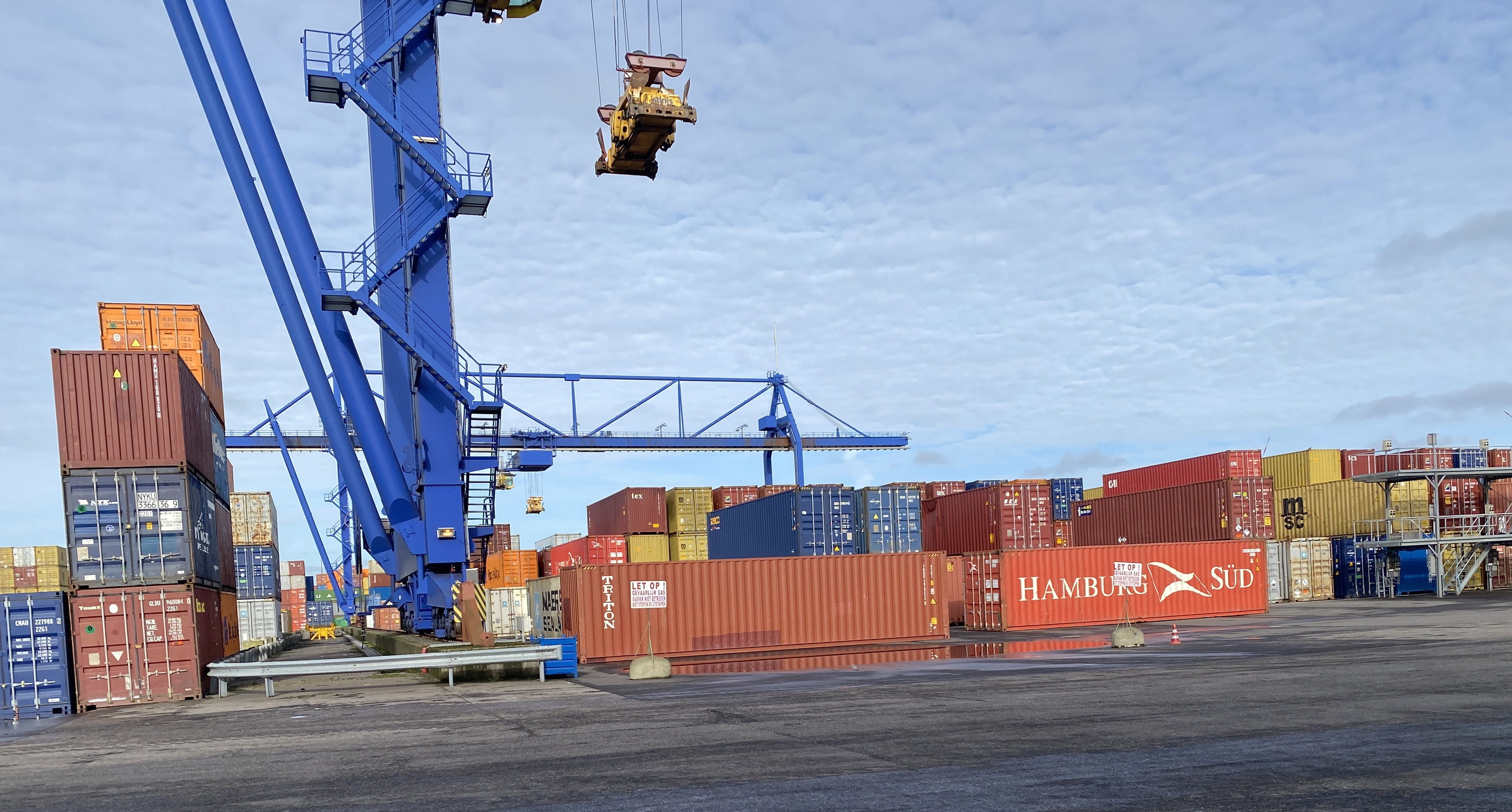
Rain glazed the concrete. Cranes cut across a low grey sky. Containers stacked in disciplined colour blocks, forklifts tracing careful lines between pallet towers.
Inside those steel boxes: the same cocoa.
Before there is a bar, there is a port, and before there is a port, there is a farm.
When the Doors Open
The container doors swing wide and the scent arrives first, not sweetness or sugar.
Earth. Fermentation. Dried fruit skins. Warm timber. A faint acidic tang.
It smells alive.
Inside: stacks of jute sacks 50 kilos each stamped in ink:
Cacao Fino de Aroma El Salvador, Peso Neto: 50 KG
Elsewhere in the warehouse: Ghana. Côte d’Ivoire. Ecuador. Peru.
Each sack represents rainfall cycles, soil chemistry, fermentation decisions, drying beds beneath West African sun, cooperative meetings, quality control documentation, export clearances.
In Ghana and Togo, I had seen those earlier stages pods opened, pulp removed, beans turned by hand during fermentation. At origin, cocoa is agriculture. At the dock, cocoa is inventory.
Origin reduced to fibre and stencil
The Warehouse Cathedral
Step into the main storage hall and scale recalibrates your senses.
Long corridors of pallets stretch beneath steel rafters. Tens of thousands of tonnes. Lot numbers. Moisture readings. Batch codes. Structured systems.
The fine-flavour container carried vivid aroma.
The aroma in the bulk warehouse is quieter.
Amsterdam is widely recognised as the largest cocoa port in the world by volume. From here, beans move to grinders, processors, couverture manufacturers and specialty makers across Europe.
Temperature stability matters.
Airflow matters, stacking pressure matters and moisture content matters.
From Farm to Container
A week earlier, I stood beside fermentation boxes in West Africa. heat radiated upward.
The mass of beans shifted under wooden planks, farmers judged progress by scent and texture.
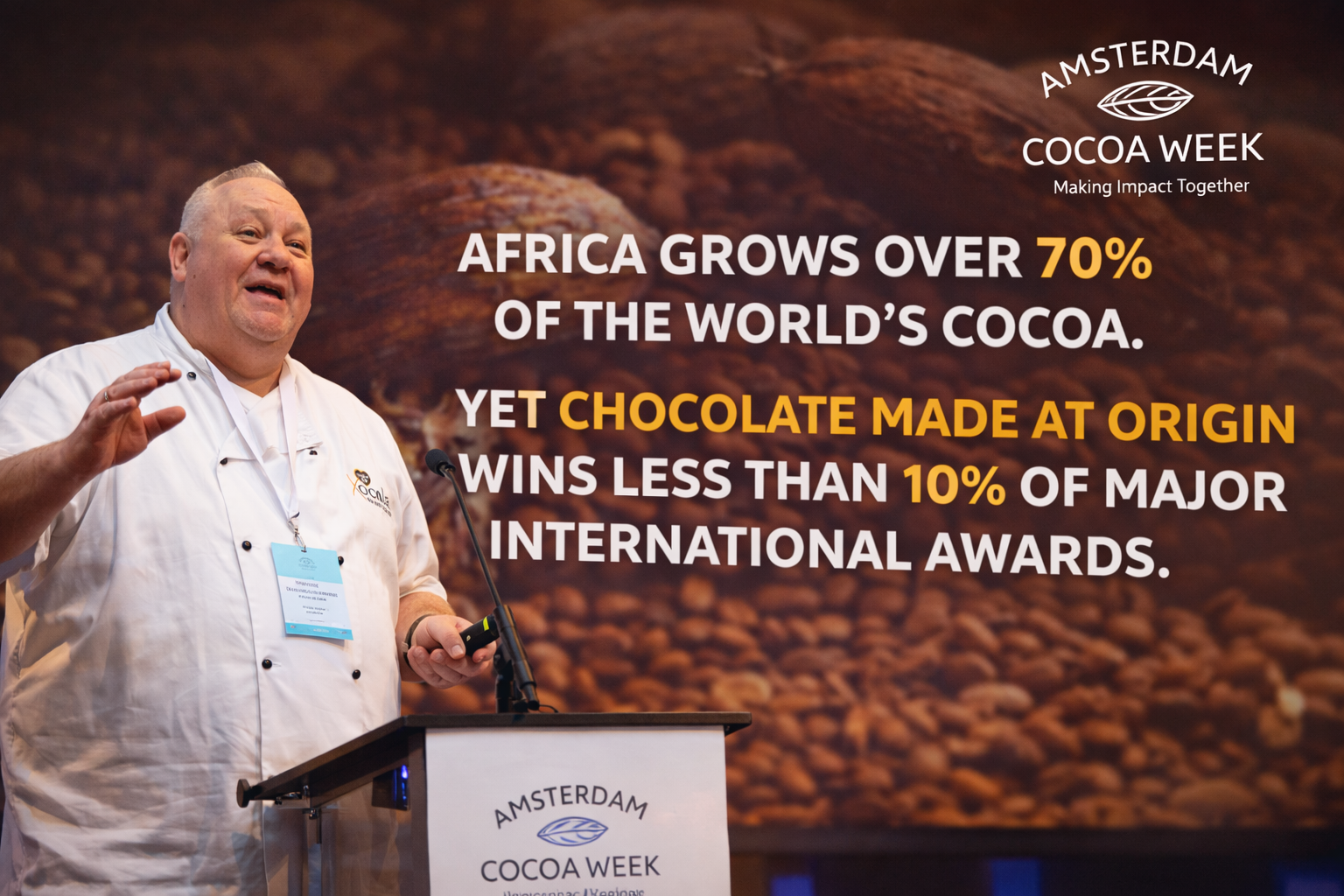 At Chocoa, we discussed imbalance:
Around 70% of the world’s cocoa is grown in West Africa.
Yet most of the financial value of chocolate is realised elsewhere in processing, branding, logistics and retail.
Standing inside a container stacked floor to ceiling with cocoa sacks, that imbalance becomes physical.
Origin countries cultivate, harvest, ferment and dry.
Europe stores, grinds, refines and markets.
The docks don’t create this structure.
They make it visible.
Warehousing.
Grinding capacity.
Conching lines.
Packaging plants.
Distribution networks.
Consumer markets.
If producing nations are to capture more value, infrastructure must develop alongside cultivation.
The Human Precision
Among steel beams and pallet stacks are people in high-visibility jackets scanning, checking, logging.
A worker records a lot number.
A forklift driver adjusts weight distribution by centimetres.
A crane operator lowers twenty tonnes with millimetre accuracy.
Every movement preserves or erodes value.
Commodity markets speak in abstractions futures curves, volatility indices, contract pricing.
In the warehouse, cocoa is tangible,
But in Ghana and Togo, it is personal.
The Arc of the Journey
There is a photograph of me standing inside one of those containers steel walls close, sacks rising above shoulder height, rain visible beyond the threshold.
A week earlier, I stood in red earth under West African sun.
Now I stood on wet European concrete.
Same crop, different systems.
Chocolate doesn’t begin on marble counters. It begins in fields, it passes through ports, enters factories and emerges as product.
Speaking at Chocoa allowed me to address the conversation.
Walking the docks allowed me to see the structure.
The cranes do not romanticise cocoa.
They demonstrate scale, infrastructure, dependency.
Chocolate is grown, chocolate is moved.
Chocolate is transformed.
And the geography of that movement shapes who captures value and who does not.