
 The Beer That Needed No Label
Fish, Fire and a Chef’s Night Out in São Tomé
There are restaurants you remember because of the linen, the silverware or the famous name above the door.
And then there are places you remember because the roof is corrugated tin, the chairs don’t match and a woman standing over a charcoal grill cooks a piece of fish so perfectly that, for a few minutes, you question half of what you have been taught about restaurants.
This was one of those nights.
São Tomé changes after dark.
The worst of the heat loosens its grip. Motorbikes buzz through the streets. Music spills from open doorways. Somewhere a radio is playing too loudly. Charcoal smoke hangs in the air alongside diesel fumes, salt and the smell of food being cooked over fire.
We were going out to eat. Not fine dining or a tasting menu, somewhere without a sommelier, a reservation system or somebody arriving at the table to explain the philosophy behind the bread.
A proper chef’s night out.
And chefs, once they are off duty and nobody is watching, often want something very different from the sort of food we spend our working lives producing.
We want something hot something grilled, and something cold to drink.
Preferably something cooked by somebody who has made the same dish hundreds, perhaps thousands, of times and has no interest whatsoever in telling us how clever it is.
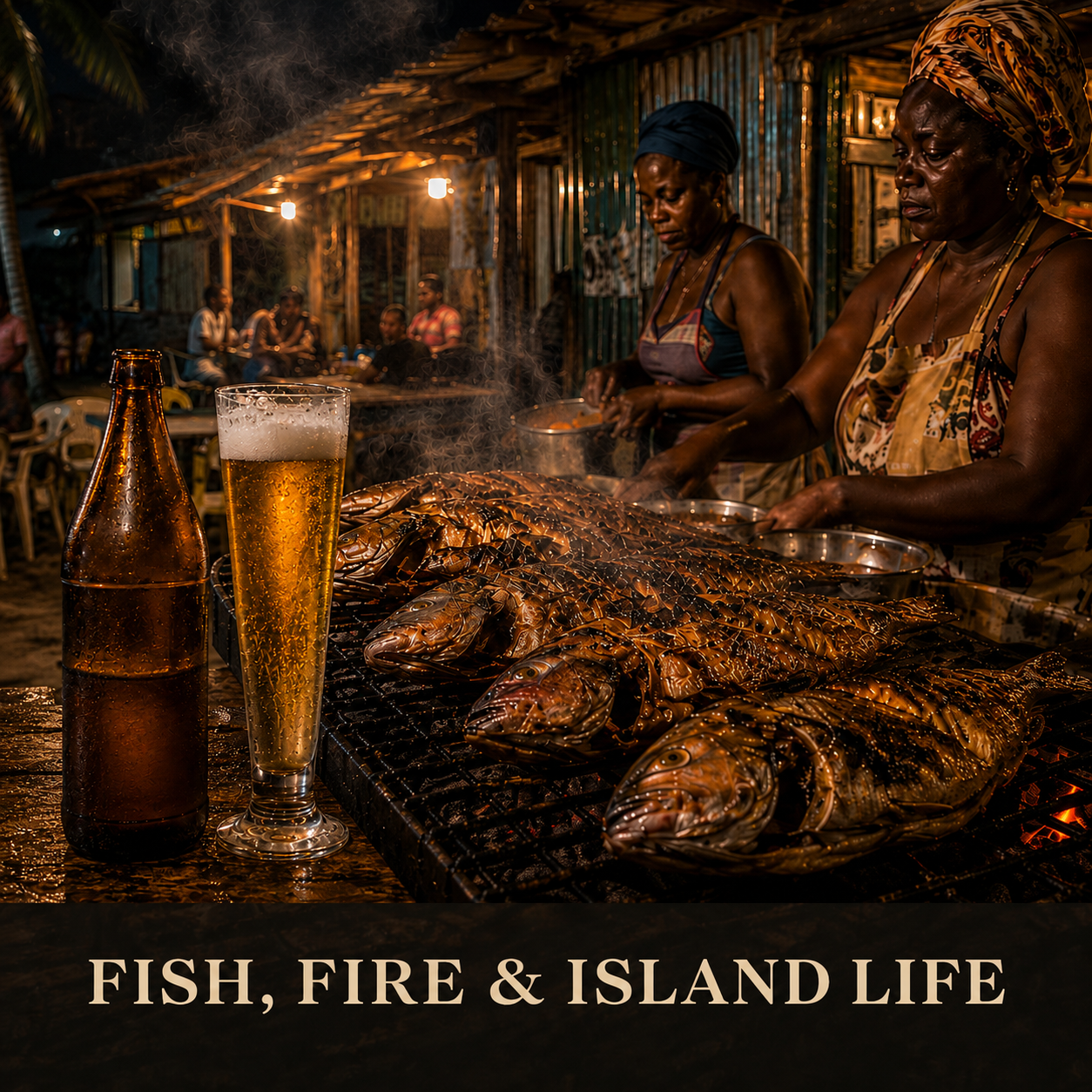 The bar didn’t look like much.
Corrugated metal roof plastic tables, plastic chairs.
A few lights, ice Cold beer, and good conversation.
Smoke drifting in from the cooking outside.
It was exactly the sort of place that could easily be overlooked by somebody searching for the “best restaurants in São Tomé”.
Which, naturally, made it considerably more interesting.
Outside, local women worked the grills. not theatrical open kitchen.
Charcoal glowed underneath wire racks. Whole fish lay over the heat, their skins beginning to tighten and blister.
Juices dropped onto the coals, the fire answered with smoke.
The women turned the fish with the calm confidence of people who knew exactly what they were doing.
No timer needed or temperature probe.
No executive chef calling across the pass, no tweezers.
Just fire, fish and experience.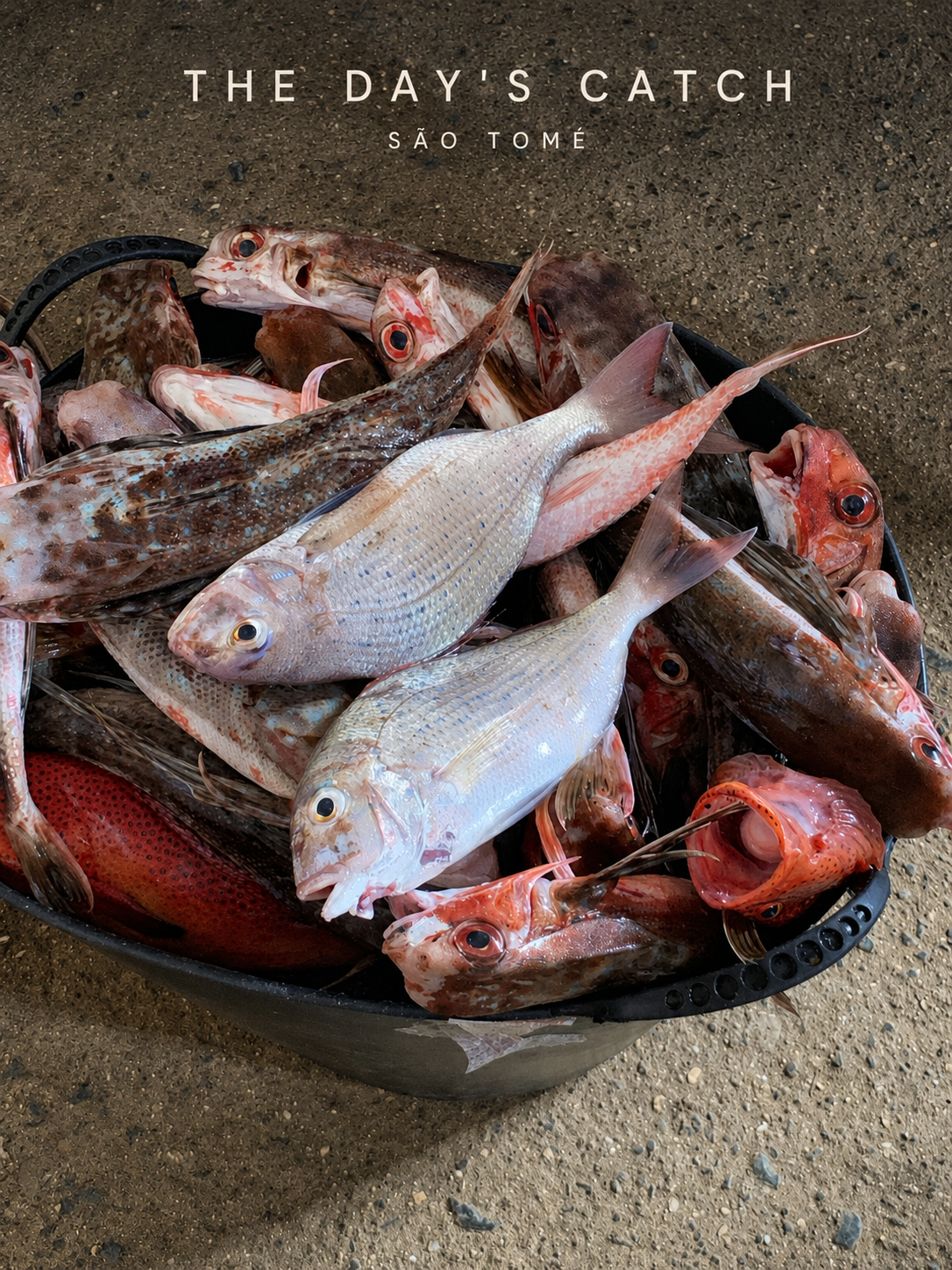
As a chef, you recognise that sort of confidence immediately.
It's the confidence that comes from repetition, knowing your ingredients.
From understanding heat not because you have read about it, but because you have stood beside it for years.
Then the fish arrived.
The skin was blistered and crisp at the edges.
The flesh underneath was still moist, soft and pulling cleanly from the bone.
It tasted of smoke, salt, sea and charcoal.
Nothing complicated, or unnecessary and absolutely delicious.
There are moments when a chef should analyse what is happening on the plate.
This wasn’t one of them. just eat the fish, pick at the bones.
Burn your fingers slightly, add something made with fiery malagueta chilli.
Take a drink. Repeat.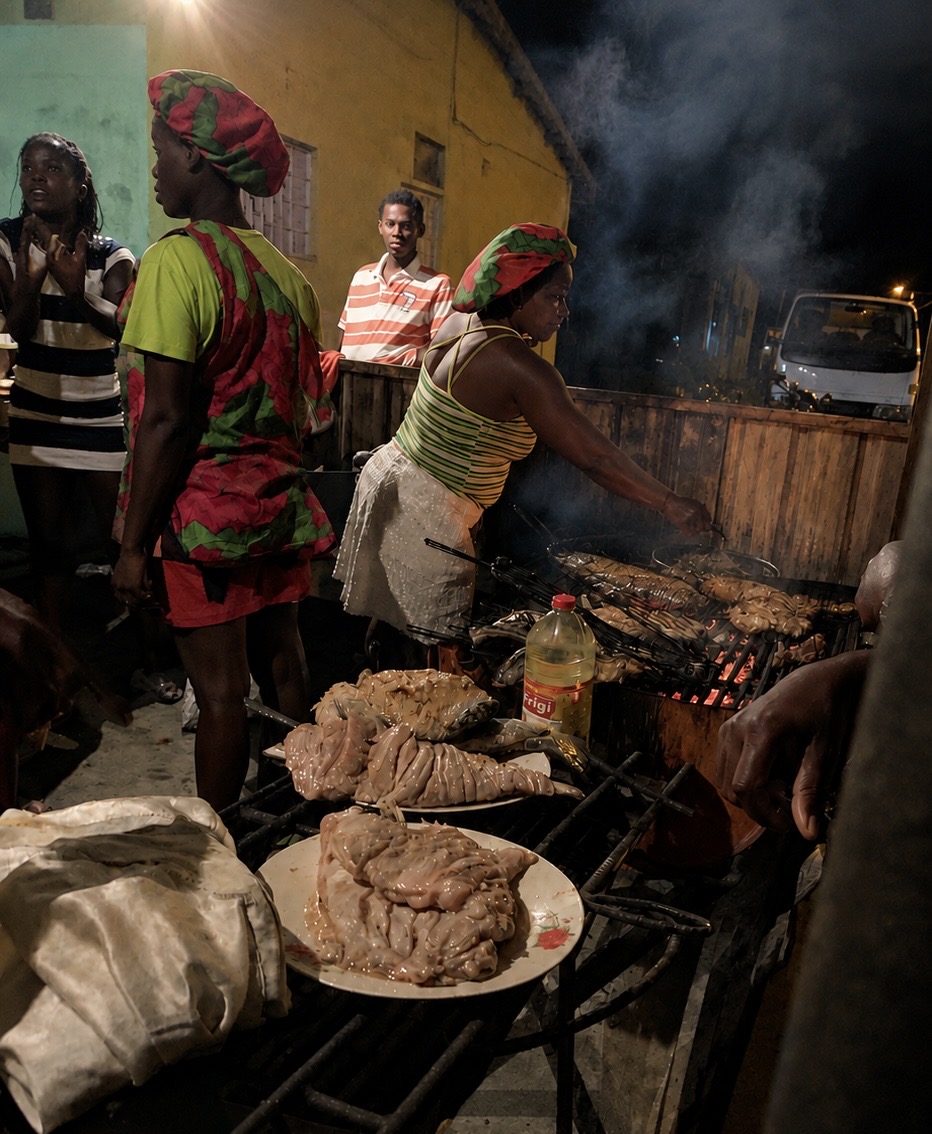
And sitting beside the plate was one of the most recognisable objects in São-Toméan food culture.
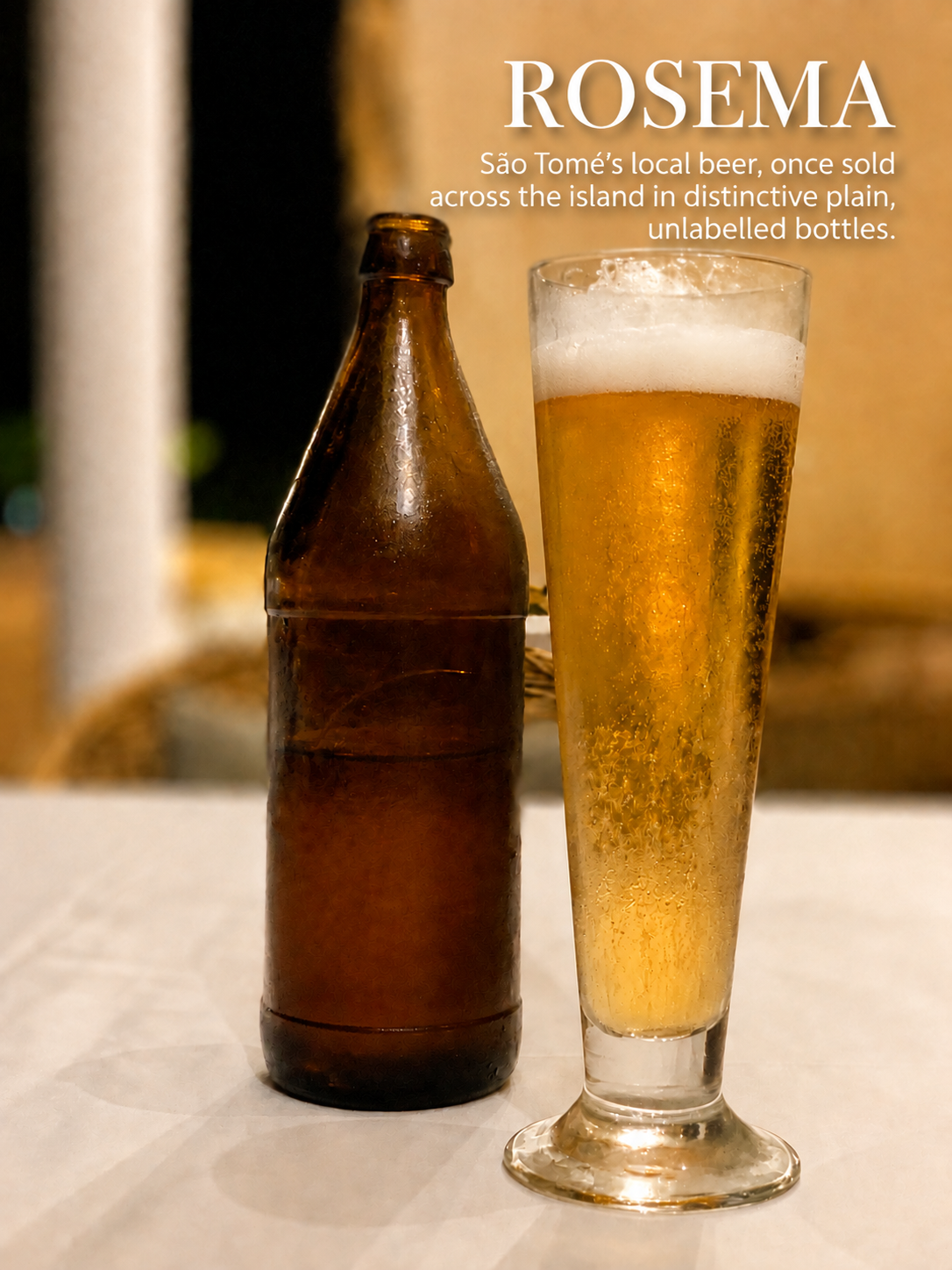
A plain brown beer bottle without a colourful paper label or illustration.No heritage story wrapped around the glass.
No paragraph telling me about craftsmanship.
Just a brown bottle, cold and wet with condensation Rosema.
In most countries, a beer bottle introduces itself before you have even removed the cap.
There is usually a carefully designed label, a slogan and some romantic story involving hops, spring water, heritage, ancient recipes or several generations of exceptionally photogenic brewers.
Rosema traditionally required considerably less ceremony.
The bottle arrived everybody knew what it was.
Rosema is brewed at Neves on the north-western coast of São Tomé, and its large returnable bottles have long been part of everyday island life.
You will also sometimes hear São Tomé’s national beer referred to as Nacional. Published accounts are not entirely consistent about whether Nacional should be considered another name for Rosema or a distinct product, so it is wise not to be too definitive about the distinction.
But the bottle in front of me needed little introduction.
And then comes the story according to the popular version, the labelling machine at the brewery broke down.
Rosema was already so familiar, and for many years faced so little local competition, that replacing or repairing the labelling equipment supposedly wasn’t considered particularly urgent.
Why label the beer everybody already recognised?
It is a wonderful story possibly too wonderful.
Versions of it have been repeated by travellers and residents for years, but I have never found a definitive brewery record proving that this is exactly how Rosema’s famously anonymous bottle came about.
So perhaps it is better treated as what it has become.
Local folklore and folklore matters.
Especially when the evidence is sitting cold and sweating on the plastic table in front of you.
Because the bottle somehow looked completely right in that bar.
Almost aggressively unmarketed.
Nobody was trying to persuade me that I was experiencing “authentic São Tomé”.
There was no carefully constructed rusticity.
No distressed wooden sign or chalkboard explaining that everything was locally inspired.
this haddent been created for travellers like me. local people were simply eating and drinking.
The women were grilling fish.
It existed perfectly well before I arrived and would continue perfectly well after I left.
That's usually a good sign.
Another Rosema arrived.
Then perhaps another.
This is how serious culinary research can occasionally deteriorate.
The bottle itself also tells a more practical story, Rosema bottles are returnable.
They are collected, washed and reused.
What may look to a visitor like charmingly minimal packaging is also part of a functioning local reuse system.
Drink the beer, return the bottle wash it, refill it.
not glamorous, not particularly marketable but deffinatly effective.
In Britain, we can spend extraordinary amounts of money talking about sustainability before placing individually wrapped biscuits beside the conference coffee.
Sometimes the simplest environmental solution really is the simplest one.
Use the bottle again.
But this is also where travellers need to be careful.
Because it is very easy to arrive somewhere such as São Tomé and fall in love with everything that appears untouched by modern development.
The corrugated roof becomes charming, unlabelled beer bottles becomes charming.
The old vehicle are charming, rough roads becomes charming.
unreliable electricity becomes charming.
The lack of infrastructure becomes evidence that somewhere remains “unspoilt”.
Especially when you know there is a hotel room, with A/C a shower and eventually an aircraft waiting for you.
Poverty always looks more romantic when you can leave it.
São Tomé and Príncipe should not be preserved as somebody else’s fantasy of paradise.
Economic limitations should not be celebrated simply because visitors find them picturesque.
The islands need opportunity. Jobs, Skills, Investment, Strong local businesses, Manufacturing, Hospitality.
Tourism that leaves meaningful money behind.
And more opportunities for São-Toméans to take the extraordinary resources around them and create greater value from them.
The women cooking our fish that night understood fire better than plenty of expensive kitchens I have worked in.
That skill has value.
The fisherman who caught the fish created value as did the trader who sold it.
The woman who prepared, seasoned and grilled it created value.
The people brewing the beer at Neves create value.
So do the farmers producing cacao, bananas, breadfruit, coconut, coffee and spices across the islands.
The interesting question is not whether visitors find all of this charming.
The interesting question is how much value remains in São Tomé and Príncipe.
That is a much bigger conversation, and a far more important one.
Rosema itself sits within that complicated economic story.
The brewery at Neves is not simply a quirky local producer making amusingly anonymous bottles for tourists to photograph.
In a small island economy, significant industrial operations matter.
Factories mean employment.
They mean engineering skills, maintenance, transport. distribution, supply chains, tax revenue, Investment.
And economic influence.
Over the years, ownership and control of the Rosema brewery have also been the subject of lengthy political and legal disputes.
That history reminds you that what looks like a simple bottle of beer can sit inside a much larger story about business, power and ownership.
Nor is the old description of Rosema as “the island’s only beer” really accurate any longer.
Imported Portuguese brands such as Sagres and Super Bock are available.
And in 2019 another locally produced beer appeared: Santola, a canned beer named after the spider crab.
Competition changes things.
Perhaps one day São Tomé will have several breweries.
Perhaps someone will brew with local fruit maybe even cacao pulp with island botanicals.
Perhaps some young São-Toméan brewer will take the ingredients growing around them and produce something nobody has tasted before.
I hope they do.
And if enough competition eventually arrives that somebody at Neves decides Rosema finally needs a proper label, that would not necessarily be a sad day.
It might be evidence of progress.
The traveller in me loves the anonymous brown bottle.
But the businessman and chef in me hopes nobody is forced to remain economically frozen simply because visitors prefer the romance of how things used to be.
Back beneath the corrugated-tin roof, none of this was being discussed.
Nobody had organised a panel entitled The Future of Sustainable Island Gastronomy.
Nobody was handing out lanyards.
Nobody had produced a PowerPoint presentation.
The women were still grilling fish, bottles were still arriving.
Somebody laughed at another table.
Music drifted in from somewhere beyond the bar.
Smoke curled upwards into the São Tomé night.
And I sat there doing what chefs should probably do more often when they travel.
Watching.
Eating.
Listening.
The fish was extraordinary precisely because nobody appeared to be trying to make it extraordinary.
Fresh fish.
Salt.
Seasoning.
Charcoal.
Heat.
Experience.
That was enough.
As chefs, we spend years learning how to add things.
Sauces.
Garnishes.
Textures.
Techniques.
Foams.
Crumbs.
Purées.
Oils.
Eventually, if we are fortunate, somebody teaches us the much harder lesson.
When to stop.
The women beside that grill already knew.
The same could almost be said for the beer bottle.
Nothing needed adding.
No gold foil.
No tasting notes.
No elaborate illustration of a tropical island.
No marketing department telling me what São Tomé was supposed to taste like.
Just beer.
Fish.
Fire.
Night.
And people.
I still like the story about the broken labelling machine.
I hope people continue telling it.
Not because I am convinced it is historically true.
I cannot confirm that.
But food and drink cultures have always collected stories around the things people eat.
Some are documented history.
Some are memory.
Some become exaggerated through repetition.
And some survive because they seem to capture something recognisable about a place.
Rosema’s unmarked brown bottle does exactly that.
It represents a particular moment in São Tomé’s story.
A small island nation.
A familiar local beer.
A returnable bottle.
A product that, apparently, once needed so little introduction that everybody recognised it without a word being printed on the glass.
That is worth remembering.
But when I think back to that night, it is not really the beer that I remember first.
It is the women beside the charcoal.
The glow of the fire.
Fish skin blistering over the flames.
Smoke catching in the night air.
The plastic table.
The cold bottle in my hand.
And that first mouthful of fish.
I have eaten in grand dining rooms.
I have eaten food prepared by famous chefs.
I have judged dishes constructed with extraordinary technical precision.
And I would happily go back to that corrugated-tin bar tomorrow.
Give me the fish.
Give me whatever the women cooking it think I should eat with it.
Give me something fiery made with malagueta.
And put a cold Rosema beside it.
Label optional.
Let the legend survive.
Let the old brown bottle be remembered.
But never ask São Tomé and Príncipe to remain unchanged simply because travellers liked the way it looked when they arrived.
I hope the women at that grill prosper.
I hope the fishermen prosper.
I hope the farmers prosper.
I hope the people working at the brewery in Neves prosper.
And I hope somebody builds the next São-Toméan brewery.
If that day comes, Rosema might finally need a label.
I’ll drink to that.