
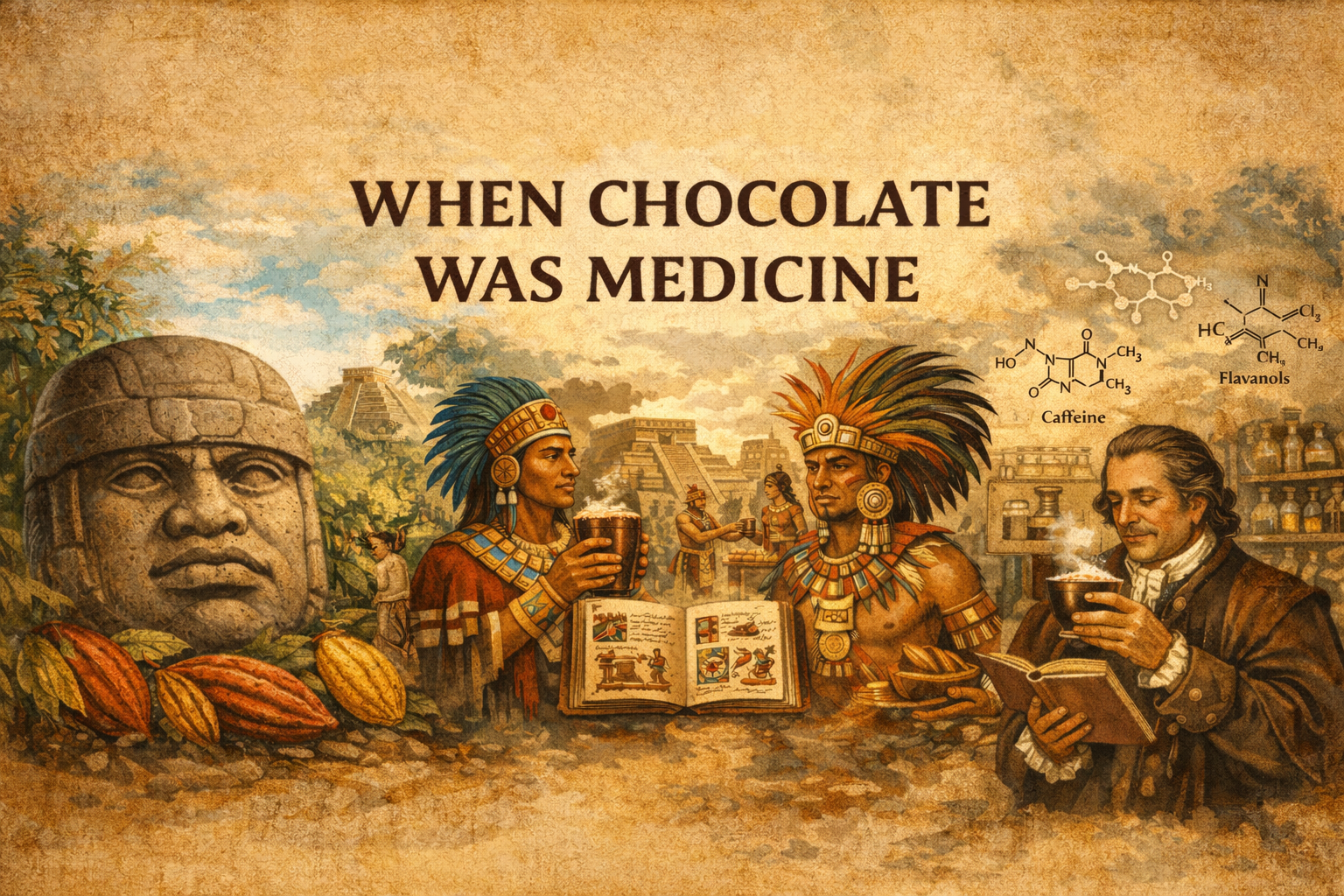
 From the Olmecs to European Apothecaries and What We Keep Forgetting
Chocolate didn’t begin as hot beverage or dessert.It began as a plant power drink.
Long before chocolate was wrapped in foil, moulded into bars, or marketed for Valentine’s Day, cacao occupied a place somewhere between ritual, nourishment, and medicine. And if we are to tell this story accurately historically, archaeologically, and botanically we must begin in Mesoamerica.
We Europeans didn’t invent medicinal chocolate, we inherited it.
The Olmecs: The First Known Cacao Civilisation
The earliest firm evidence of cacao use comes from the Olmec civilisation, centred along the Gulf Coast of present-day Mexico (c. 1500–400 BCE).
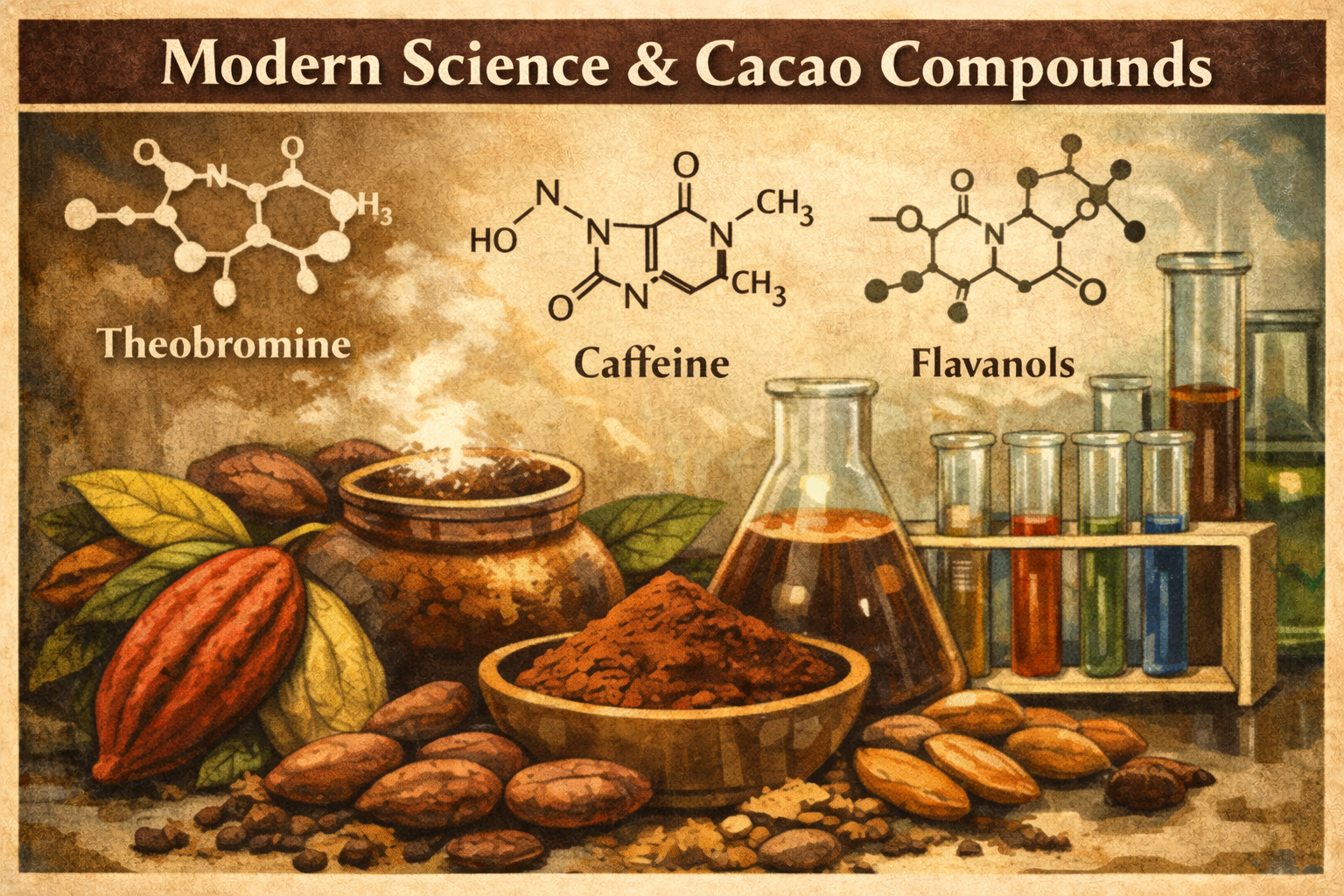
Archaeochemical analysis of pottery from sites such as San Lorenzo has detected theobromine, a biomarker compound specific to cacao. This provides strong evidence that cacao beverages were being prepared as early as 1500 BCE.
 Theobromine isn't sugar.
It is a methylxanthine alkaloid a mild stimulant that affects the cardiovascular and nervous systems. Its presence tells us something important:
Cacao was valued for its bioactive properties from the very beginning.
The Olmecs left no medical treatises, but material evidence shows cacao was consumed deliberately, prepared carefully, and likely used in elite or ritual contexts.
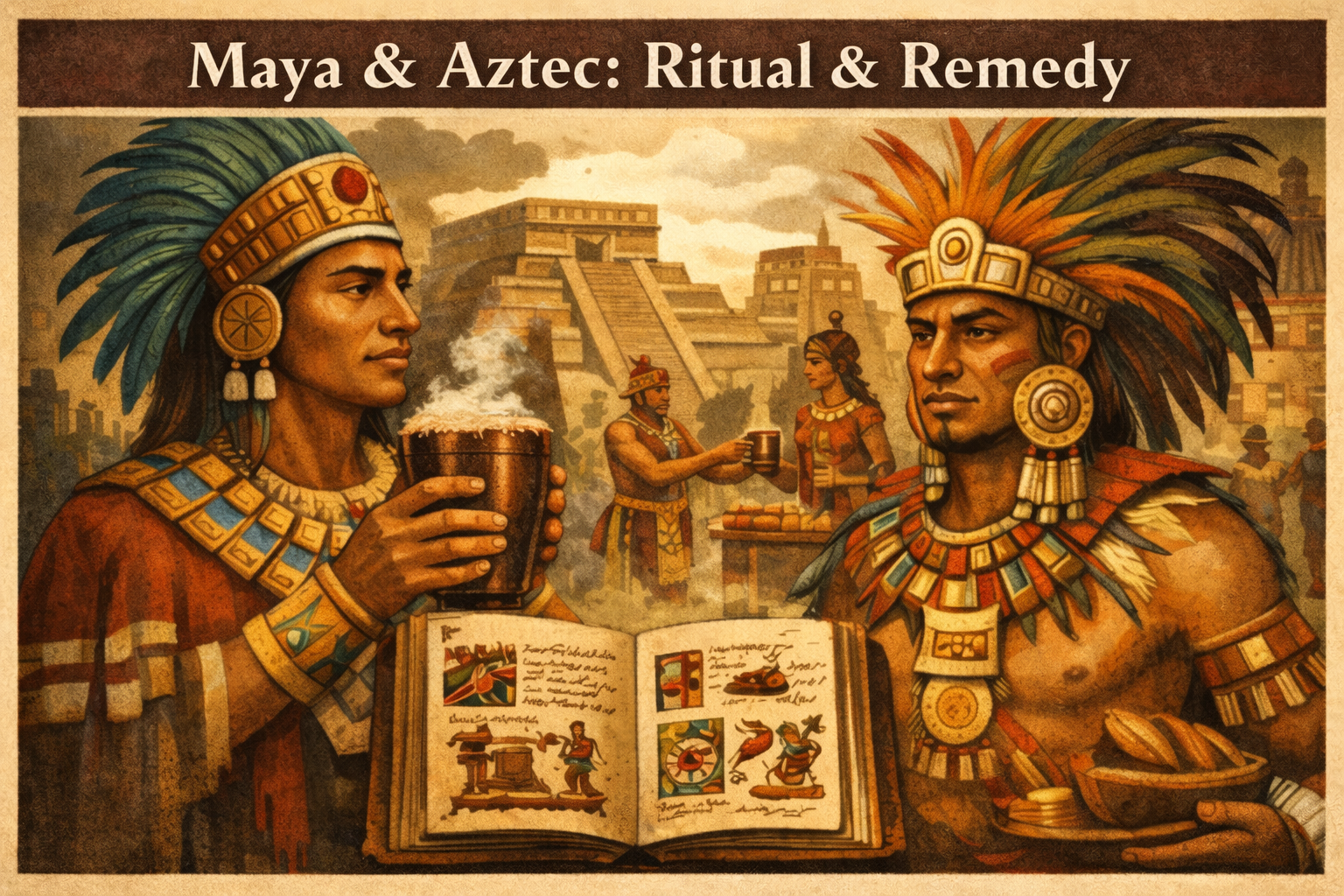
The medicinal and ritual use of cacao becomes clearer in later Mesoamerican cultures, especially the Maya civilisation and the Aztec Empire.
Maya ceramics depict cacao used in burial rites and elite feasting. Hieroglyphic inscriptions identify cacao vessels specifically designated for chocolate drinks.
Among the Aztecs, cacao beverages (xocolatl, meaning “bitter water”) were recorded by Spanish chroniclers as:
* Fortifying warriors
* Sustaining long-distance travel
* Used in ritual and elite hospitality
* Combined with chilli, maize, vanilla, and botanical additives
These drinks were unsweetened. Bitter. Frothy. Stimulating.
In Nahuatl medical logic as in many plant-based knowledge systems bitterness signalled potency.
The medicinal grammar was simple and consistent, bitter plants are strong plants.
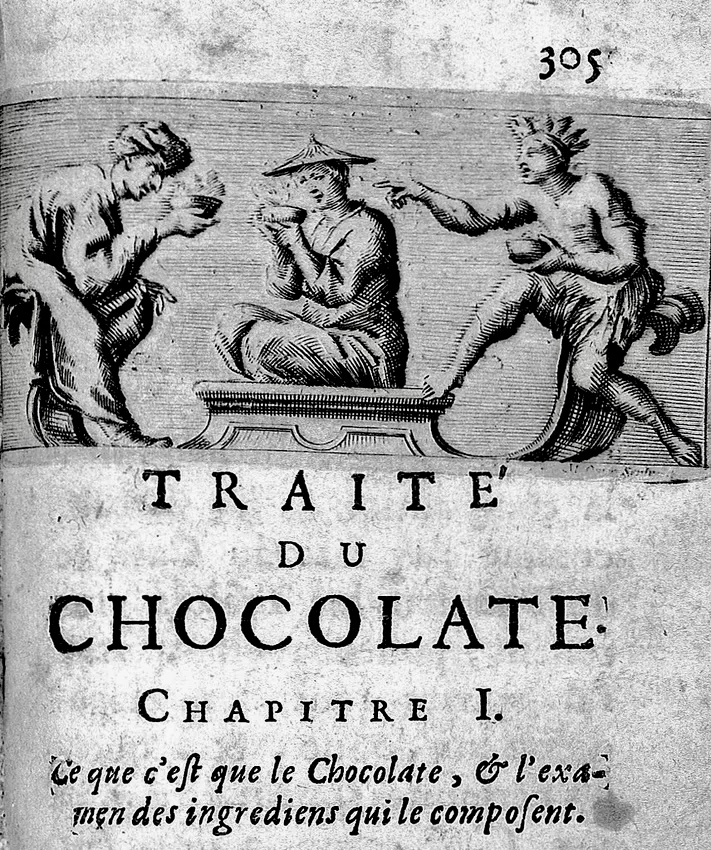
 When cacao reached Spain in the 16th century and wider Europe in the 17th, physicians attempted to interpret it through humoral medicine the dominant European medical theory at the time.
In 1631, Antonio Colmenero de Ledesma published Curioso tratado de la naturaleza y calidad del chocolate, analysing chocolate according to whether it was hot, cold, wet, or dry in temperament.
Chocolate confused them.
It stimulated yet calmed.
It warmed the body yet aided digestion.
Rather than dismiss it, they classified it as medicinal.
By the mid-1600s, English advertisements promoted chocolate as beneficial for digestion, lung complaints, melancholy, and reproductive vigour. In 1671, Philippe Sylvestre Dufour grouped coffee, tea, and chocolate together as global stimulant beverages in Usage du caphé, du thé, et du chocolate.
Europe medicalised chocolate in print, but it didn’t originate its medicinal identity.
It translated an indigenous plant drink into European scientific language.
What fascinates me particularly as someone working between West Africa and Europe is how plant logic converges across cultures.
In Mesoamerica: Bitter cacao drinks signified strength and vitality.
In West Africa:
Bitter roots and bark are used in herbal tonics to stimulate digestion and “strengthen” the body.
In Europe:
Apothecaries measured bitter tinctures in drops as digestive aids.
Different continents. Similar botanical reasoning.
Bitterness equals potency.
When I stand in a Ghanaian cocoa farm and hear local discussions about bark, leaves, and plant tonics, I recognise a logic that predates European pharmacology. The tree is understood as a whole organism, not merely a commodity.
Europe focused on the beverage.
Producing cultures understood the plant.
What Modern Science Confirms and Complicates
 Cocoa contains:
* Theobromine (mild stimulant)
* Small amounts of caffeine
* Polyphenols, including flavanols
Modern research has explored associations between flavanol-rich cocoa and vascular function, nitric oxide production, and circulatory markers.
But context matters:
* Roasting reduces certain polyphenols
* Alkalisation (Dutch processing) lowers flavanol levels
* Sugar alters metabolic impact
* Milk changes polyphenol availability
* Dose influences physiological response
A high-cacao minimally processed drink resembles ancient bitter preparations far more than modern milk chocolate.
We must distinguish between:
* Sacred Mesoamerican cacao beverages
* 17th-century European medicinal chocolate
* Modern high-flavanol dark chocolate
* Highly sweetened industrial confectionery
They are chemically and culturally distinct.
The Functional Food Renaissance
Today we market:
* Raw cacao
* Flavanol supplements
* Mood chocolate
* Brain chocolate
* Adaptogenic cacao blends
The pattern is historical.
17th century: medicinal tonic
19th century: industrial confection
21st century: functional superfood
The risk remains exaggeration.
Seventeenth-century Europe claimed chocolate cured plague.
Modern marketing sometimes makes softer but similarly inflated claims.
Chocolate is bioactive.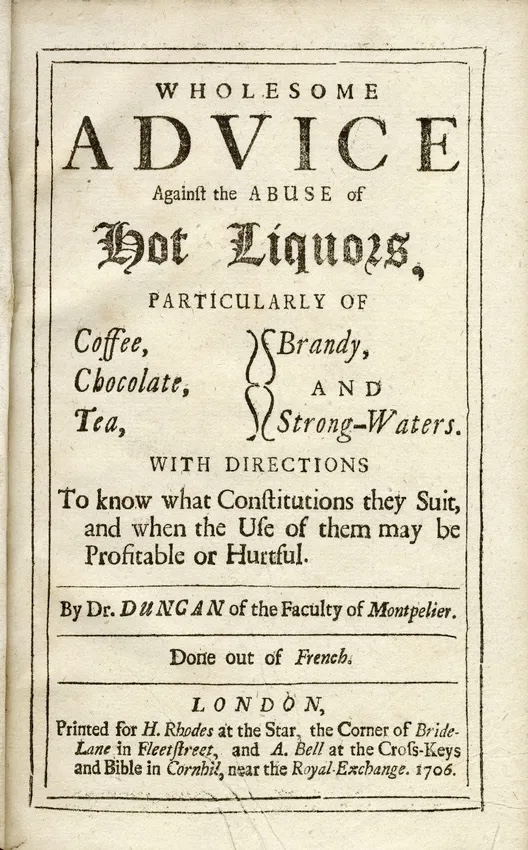
It’s not a pharmaceutical cure.
A Whole-Tree Perspective
My work at origin has shaped how I see this history.
Cacao is not only a bean.
It is:
* A fruit with fermentable pulp
* A seed rich in alkaloids and polyphenols
* A husk suitable for infusion
* A tree integrated into ecological and cultural systems
When we reduce chocolate to indulgence, we flatten its history.
When we reduce it to “superfood,” we oversimplify it again.
Chocolate began as:
* Ritual beverage
* Stimulant
* Symbol of power
* Botanical preparation
Its journey through Europe added medical classification.
Industrialisation added sugar.
Modern science adds biochemical analysis.
But at its heart, cacao remains what the Olmecs first demonstrated over 3,000 years ago:
A bitter plant drink with physiological effect.
So… Was Chocolate Medicine?
Chronologically, yes.
* The Olmec civilisation used cacao in early ceremonial contexts.
* The Maya civilisation integrated it into ritual life.
* The Aztec Empire used it as stimulant and elite drink.
* 17th-century Europeans prescribed it as therapy.
* Modern researchers analyse its flavanol content in clinical settings.
Chocolate has always existed at the boundary between nourishment and pharmacology.
But perhaps the more important question is this:
What do we mean by medicine?
If medicine includes:
* Bioactive plant compounds
* Ritual and psychological reinforcement
* Social bonding
* Sensory engagement
* Cultural meaning
Then chocolate has occupied medicinal space for millennia.
It began as bitter water in Mesoamerica.
It travelled through European apothecaries.
It now sits in wellness aisles and artisan workshops.
And every time we lift a cup of high-cacao chocolate and feel its mild stimulation we are tasting a continuity that stretches back over three thousand years of Plant knowledge. Chemistry. Ritual. Agriculture. All stirred into one cup.