
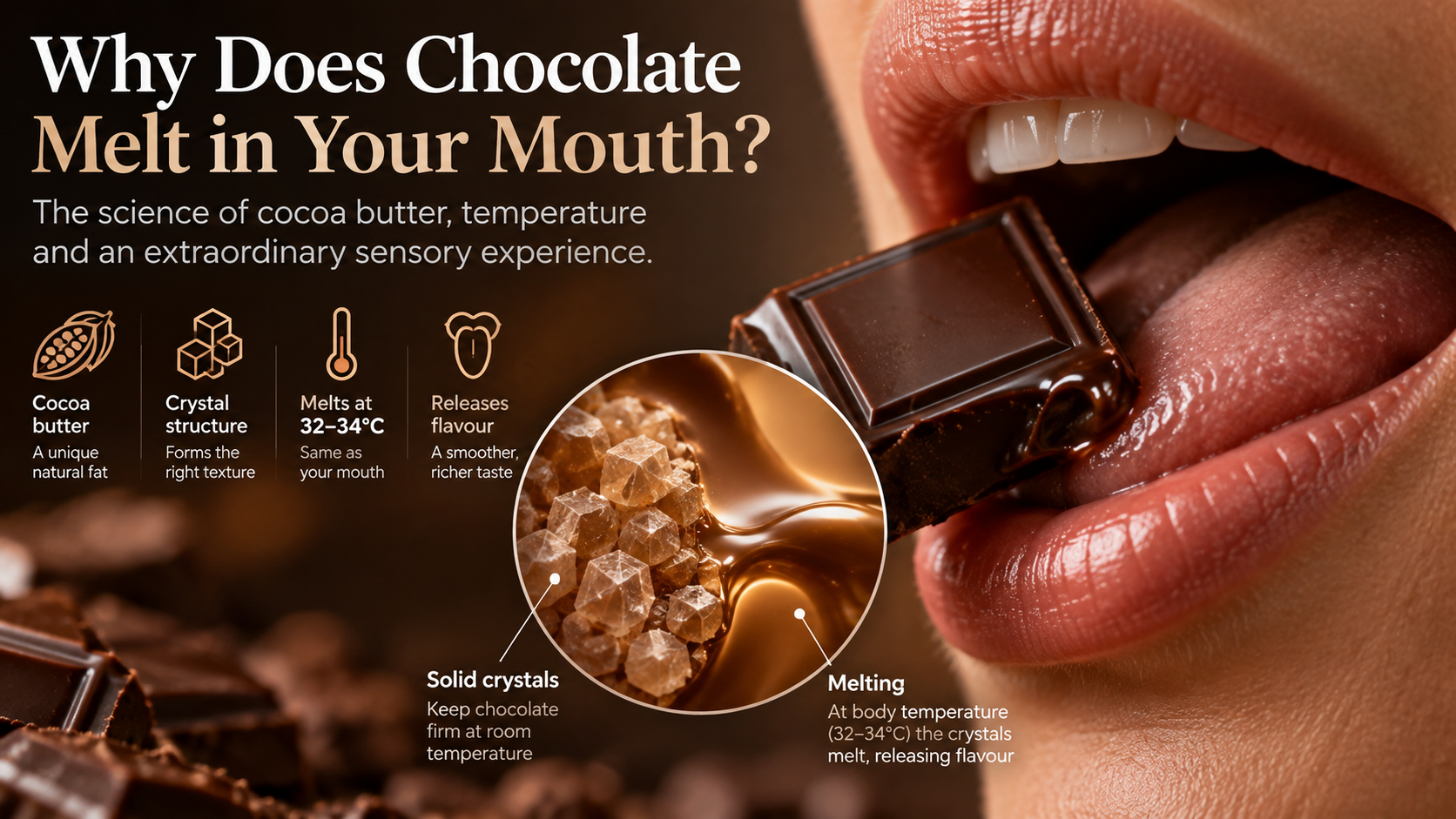
 There’s a moment with good chocolate when everything changes.
You break the bar, snap a proper one, clean and sharp, not an apologetic bend or sad little crumble.
You smell it before you eat it roasted cacao, fruit, tobacco, spice, whatever that particular bean and its journey have decided to give you.
Then you put a piece in your mouth, then wait, at first, nothing much happens.
Then the edges begin to surrender, the chocolate softens, it spreads, aromas start turning up that weren’t there a few seconds ago.
And suddenly the thing that was solid in your fingers is disappearing across your tongue, that isn’t some happy accident, that’s cocoa butter doing what cocoa butter does.
And frankly, it’s one of the reasons chocolate is such a clever food.
Cocoa butter is the bit doing the heavy lifting inside every cacao bean is fat, not glamorous or romantic.
Fat.
We call it cocoa butter, and without it chocolate would is a very different experience, its cocoa butter that gives chocolate much of its gloss, its firmness, its snap and, crucially, that glorious melt.
But cocoa butter is complicated stuff, its fat molecules can organise themselves into different crystal structures food scientists call this polymorphism, which is exactly the sort of word capable of clearing a dinner table in seconds.
You don’t need to remember ithat all do need to know is this: cocoa butter can set in different ways.
Some are useful some are rubbish.but one particular arrangement gives us most of what we recognise as properly tempered chocolate.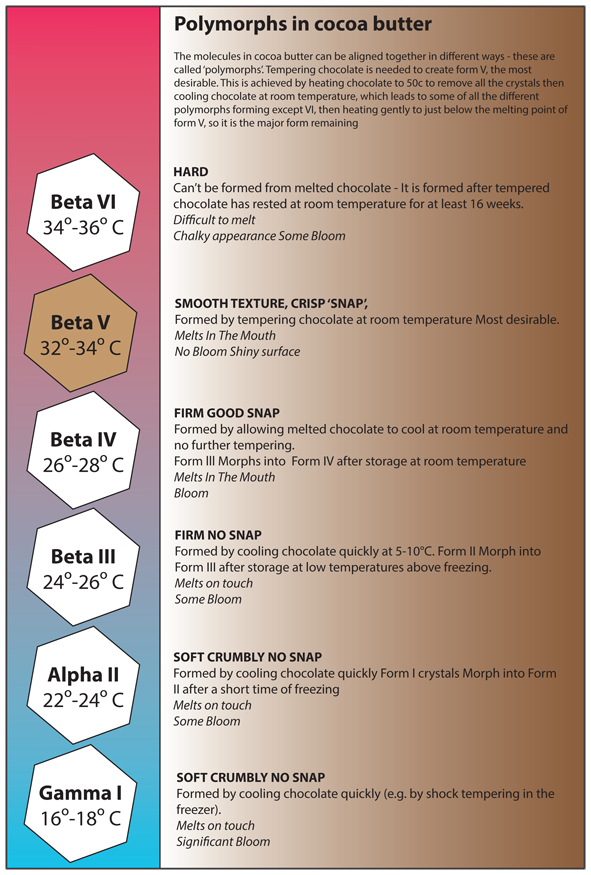
The magic temperature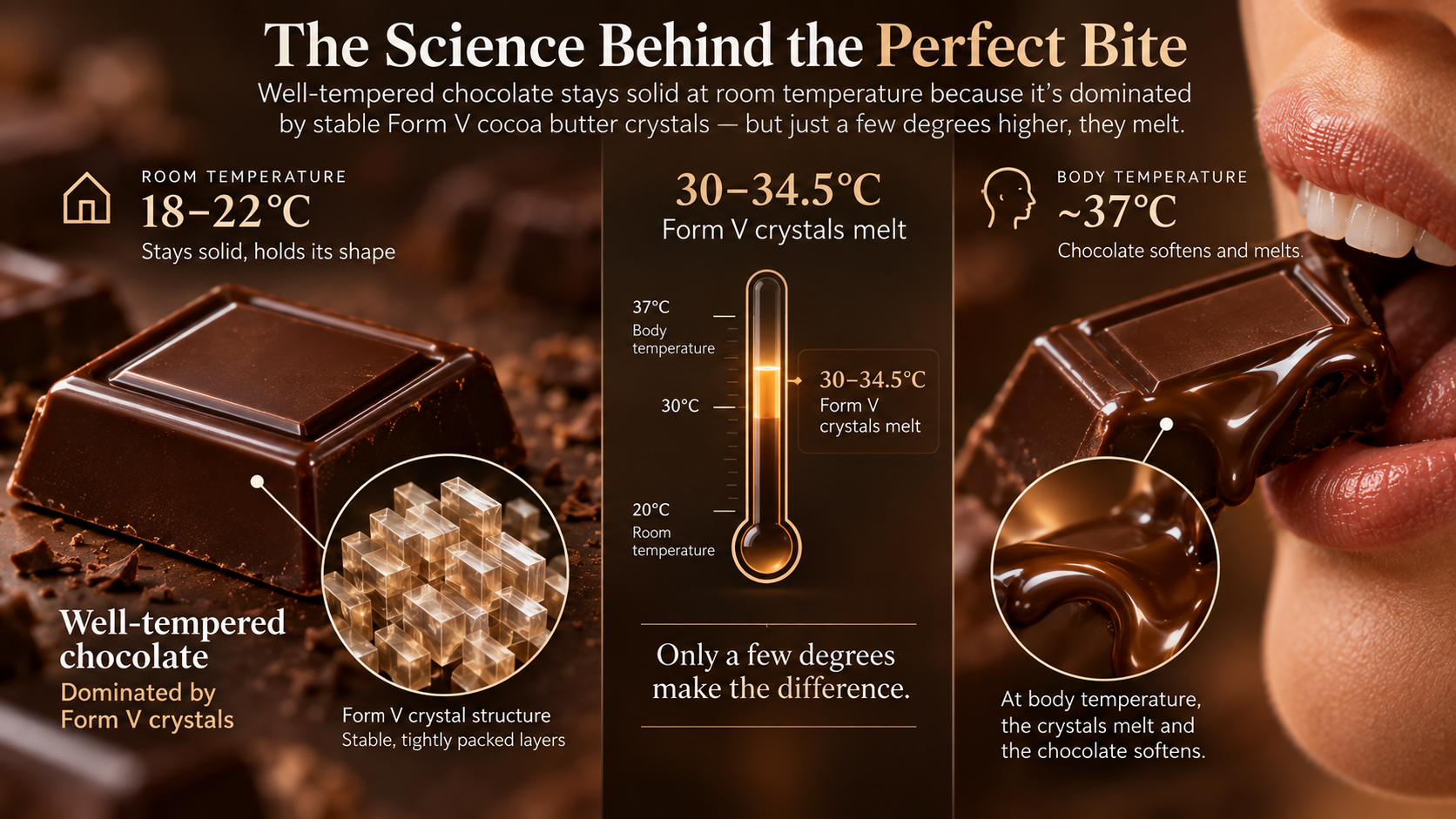
Well-tempered chocolate is usually dominated by what chocolatiers call Form V crystals.
That narrow temperature window is the magic. At 20°C the chocolate can be glossy, firm and capable of a clean snap. Put it on a 37°C tongue and those carefully organised cocoa-butter crystals begin to collapse. Solid becomes liquid, and flavour compounds that were trapped in the chocolate are released across the palate.
That is why, during tastings, I keep telling people the same thing stop chewing the chocolate, at least at first.
Let it sit there, give it a chance, your mouth is doing something useful for once.
Allow the chocolate to melt and you’ll often find flavours appearing that you would have missed entirely if you’d attacked it like a biscuit.
Tempering: controlled obsession
Watch a chocolatier tempering chocolate and, from the outside, it can look faintly ridiculous.
Heat it. Cool it. Move it around. Warm it again. Check the temperature. Swear at it.
Start again because somebody opened the kitchen door.
But there is a reason for all this apparent madness, we’re controlling crystals.
Tempering encourages cocoa butter to set into the structures we actually want.
Get it right and you have chocolate with:
● a good clean snap
● a glossy surface
● proper contraction from a mould
● better resistance to fat bloom
● and, most importantly, a beautiful melt
Get it wrong and the chocolate lets you know by going dull, streaking and sticking to the mould.
It melts when you look at it. Or it develops that pale grey bloom that makes customers think you’ve sold them chocolate from the Crimean War.
Chocolate has very little sympathy for incompetence, that's part of its charm.
Listen before you taste
One of the things I love about chocolate is that you don’t even need to eat it to start judging it.
Break it. Listen, a well-tempered dark chocolate bar should give you a clean, decisive snap.
That’s structure.
At room temperature, the cocoa butter crystals form a firm network.
Break that network and it fractures.
Then you put the same piece into your mouth and that apparently solid structure begins collapsing almost immediately.
Think about that.
A few seconds ago it was strong enough to snap cleanly between your fingers.
Now it’s turning into liquid on your tongue, firm in the hand, brittle when broken, silky when warm.
That is an extraordinary piece of food engineering.
And nature came up with the raw material before we understood what was going on.
And then there’s the waxy stuff we’ve all eaten it.
Chocolate that doesn’t seem to want to leave, it sits there, coats your mouth, clings to the roof of your palate like an unwanted house guest.
You swallow, it’s still there, that’s mouthfeel, and mouthfeel matters enormously.
Traditional chocolate relies heavily on cocoa butter for its characteristic melting behaviour, but different products can contain different fat systems.
Milk chocolate, for example, contains milk fat, which alters the way the chocolate softens and melts.
Some confectionery products may contain other permitted vegetable fats too, depending on the recipe and the regulations governing the product.
Different fats melt differently, and your mouth notices, it always notices.
When I’m judging chocolate, I’m not merely asking whether something is “nice”.
That tells you almost nothing.
I’m asking: Does it melt cleanly? Does it disappear smoothly? Does it coat the mouth?
Does it feel greasy? Does it feel waxy? Does the texture help the flavour?
Or is the texture getting in the way?
Because texture and flavour aren’t strangers sitting at opposite ends of the bar.
They’re having dinner together.
The way chocolate melts changes the way you experience what it tastes like.
Try this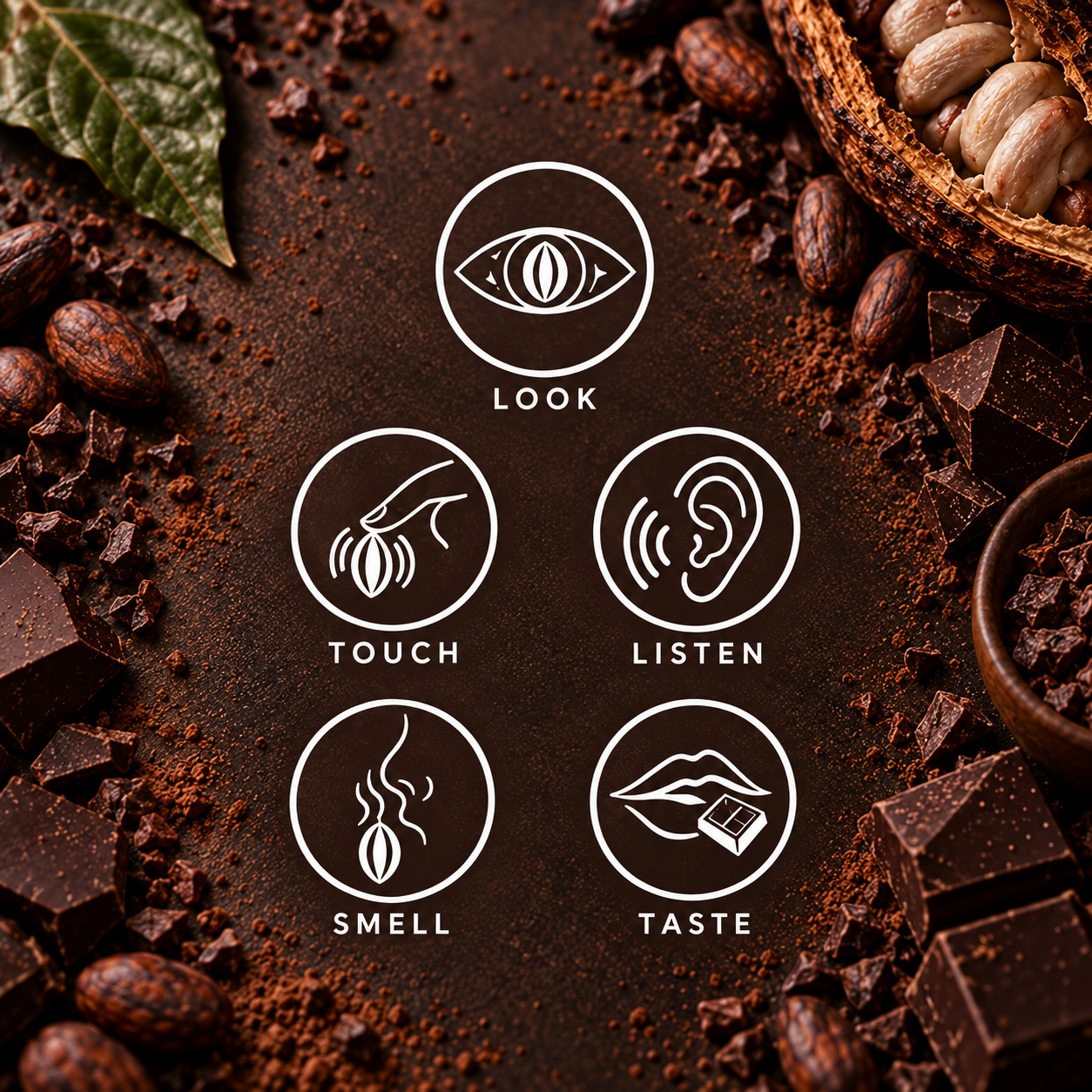
Get a decent piece of dark chocolate.
Not something you’ve just pulled from the fridge.
And don’t eat the whole bar while reading this.
Take one square.
Hold it between your fingers for a moment.
Look at it, smell it.
Then put it on your tongue, and do absolutely nothing.
No chewing or sucking dont be impatience just wait.
After a few seconds you’ll feel the edges begin to soften.
Then pay attention, the first flavour isn’t always the final flavour.
Maybe the initial bitterness eases, fruit starts appearing.
Red berries, raisins, citrus, roasted nuts, toffee, tobacco, spice, maybe none of those.
Every chocolate has its own story.
As it warms, aromatic compounds become easier to perceive and the experience starts changing.
That is why good chocolate tasting should never be rushed.
You can’t properly interrogate a chocolate bar while chewing it to death in three seconds.
Your nose is doing more work than you think
We talk endlessly about the “taste” of chocolate, but much of what we describe as flavour comes from aroma.
As the chocolate warms and melts, aromatic compounds are released.
Some travel from the mouth up towards the nasal cavity.
This is called retronasal olfaction, another wonderful technical phrase that essentially means:
you are smelling the chocolate from the inside, your brain takes that aroma and combines it with sweetness, bitterness, acidity, texture and temperature.
And suddenly you have flavour, this is why a cold piece of chocolate tastes different from one allowed to melt properly.
Temperature makes a difference, texture matters, aroma matters.
Everything is happening at once.
Chocolate tasting is less like reading a shopping list and more like listening to an orchestra.
Assuming the orchestra has been fermented for six days and roasted.
The chocolatier’s impossible brief
Think about what we actually ask chocolate to do.
It must be firm enough to handle.
Strong enough to mould stable enough to wrap tough enough to travel, glossy enough to look seductive in a box.
Brittle enough to break cleanly and the second it reaches your mouth, we expect it to give up completely.
That’s quite a job description.
And if you’re a chocolatier, that’s the balancing act.
Temperature, time, crystallisation, recipe, storage, handling, get all of them right and nobody notices.
They simply eat the chocolate and say: “That’s good.”
Which, of course, is the point.
So next time, don’t just eat it
Take the chocolate.
Look at it, smell it, break it, listen, then put it on your tongue and leave it alone.
Wait for that moment when the edges begin to go, when something solid becomes liquid, and the aroma turns into flavour, and the chocolate finally gives itself up.
That’s not just melting, it's the experience, and sitting behind the whole performance is one extraordinary ingredient:
cocoa butter.
The unsung fat that makes chocolate possible.
Want to taste chocolate properly?
If you’ve spent your life chewing chocolate and swallowing it before it’s had the chance to introduce itself, there’s another way.
My Chocolate Tasting Guide explores how chocolatiers and professional judges use sight, sound, aroma, texture and flavour to understand what’s really happening in a piece of chocolate.
And on my Chocolate Safari® tastings, private experiences and masterclasses, we go much further into cacao, origin, flavour, history, bad chocolate, great chocolate and the stories behind the bar.
Chocolate is enjoyable, but great chocolate should be experienced.
“Experience this for yourself on a professionally guided Chocolate Safari® tasting.”