
Beer and Chocolate Pairing: A Chocolatier’s Guide to Getting It Right
Wine gets all the attention.
Someone opens a bottle, breaks out the good chocolate and suddenly everybody starts talking about terroir, tannins and sophisticated evenings by the fire.
Beer?
Beer gets the packet of crisps, which is a shame, because put the right beer beside the right chocolate and things can get seriously interesting.
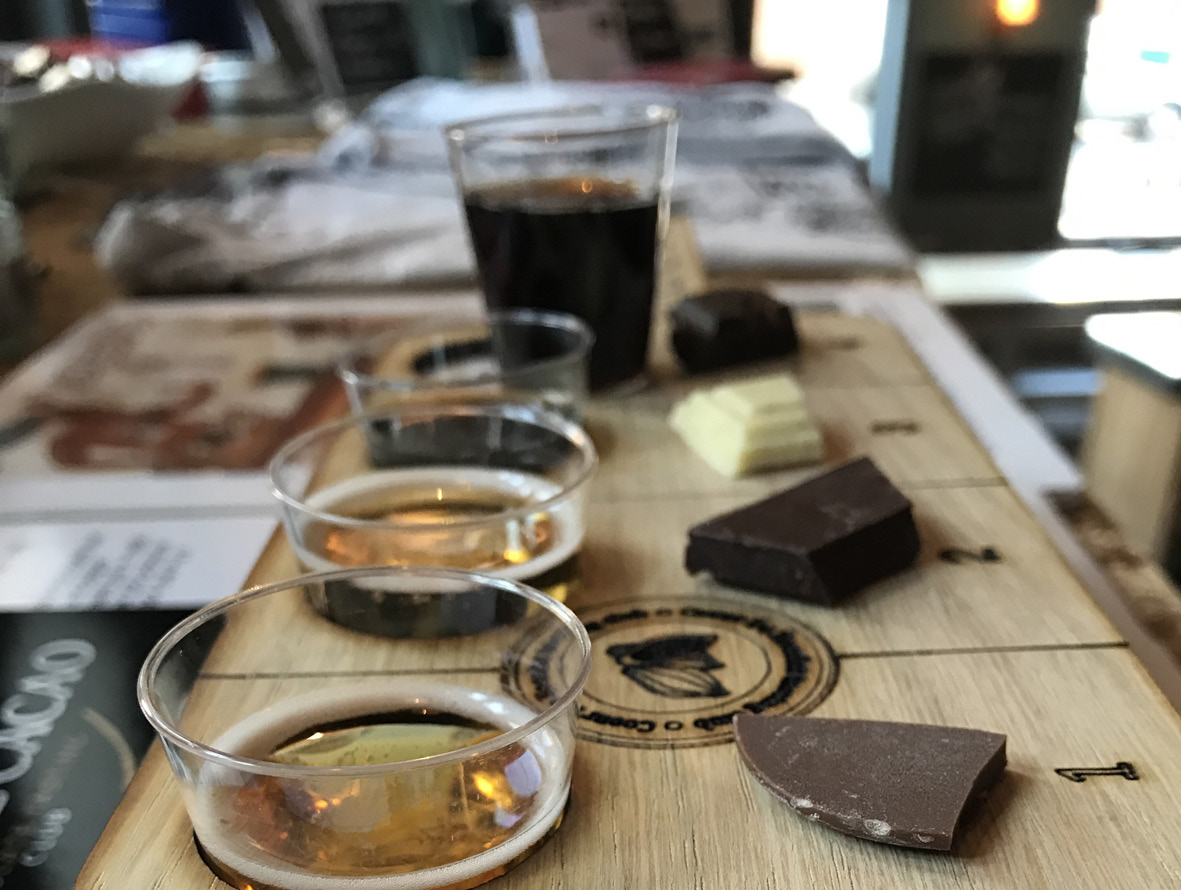
I've been pairing chocolate and beer for years in tastings, corporate events and on Chocolate Safaris and when it works, it really works.
Roasted malt against roasted cacao. Caramel against caramel. Fruit against fruit. Bitterness wrestling with sweetness.
A cold, sparkling beer cutting through cocoa butter and resetting the palate ready for another bite.
But let's establish something before we begin.
There is no magic chart.
A stout does not automatically love every dark chocolate. An IPA will not suddenly behave because somebody has paired it with a 70% bar.
You have to taste, and sometimes the combination you thought would be magnificent tastes absolutely dreadful.
That's half the fun.
 Why Beer and Chocolate Work Together
Chocolate isn't one flavour.
Depending on the cacao, fermentation, drying, roasting, recipe and manufacture, you might find fruit, flowers, nuts, caramel, spice, earth, wood, tobacco, malt, coffee and all sorts of other characteristics.
Researchers have identified hundreds of volatile compounds in cocoa and chocolate, which helps explain why its aroma can be so wonderfully complicated.
Beer isn't exactly short of personality either.
Malt gives us bread, biscuit, caramel, toast, nuts, coffee and chocolate-like notes.
Hops can bring bitterness, citrus, tropical fruit, herbs, resin and spice.
Yeast can throw banana, clove, pepper, fruit and all manner of fermentation character into the mix.
Then you've got roasting, barrels, fruit additions, smoke, souring and ageing.
Put the two together and you have an enormous playground.
Or an enormous opportunity to get it wrong.
 Forget Rules. Think About Relationships.
When I'm building a pairing, I usually think in three ways.
Complement
Find flavours that already have something in common.
A roasted porter with a chocolate carrying coffee and nut notes.
A fruity beer with a berry-led chocolate.
A caramel-rich beer with milk chocolate.
They're already speaking roughly the same language.
Contrast
This is where opposites make things interesting.
Sweet chocolate against bitterness.
Creamy milk chocolate against a crisp, dry beer.
Rich ganache against acidity.
Contrast wakes the palate up.
But push it too far and you've got a fight rather than a marriage.
Bridge
This is perhaps my favourite.
Find one flavour that connects the beer and chocolate.
Imagine a dark chocolate with orange alongside a beer with citrus notes.
Or hazelnut praline beside a malt-driven brown ale.
The orange or hazelnut becomes the handshake between the two.
Once you start thinking like this, pairing becomes much more interesting than:
Dark chocolate = stout.
How to Taste Beer and Chocolate Properly
Don't neck half a pint, shove a square of chocolate in your mouth and declare yourself a sensory analyst. Give both products a chance.
First, taste the chocolate Look at it. Smell it. Break it and listen to the snap.
Put a small piece on your tongue and allow it to melt rather than chewing it immediately.
Pay attention as the flavour develops. What arrives first?
Sweetness? Acidity? Roast? Fruit? Nuts? Bitterness?
What remains after you've swallowed?
Good chocolate changes while you're eating it.
Now taste the beer
Smell it before drinking, take a small sip.
Think about sweetness, bitterness, acidity, malt, hops, yeast character, carbonation, body and finish.
Don't worry about inventing elaborate tasting notes.
If it reminds you of toast, say toast. If it reminds you of grapefruit, say grapefruit.
If it reminds you of the shed at the bottom of your grandfather's garden, that's valid too.
Taste belongs to memory as much as vocabulary.
Then bring them together
I like to let a little chocolate melt first, then take a small sip of beer while some chocolate is still coating the mouth.
That's where the interesting bit happens.
Has the chocolate become fruitier?
Has the beer become more bitter?
Did a coffee note suddenly appear?
Has something unpleasant appeared that wasn't obvious when you tasted them separately?
Then reverse it.
Beer first.
Chocolate second.
The sequence can change the experience.
There is no need to drown the chocolate in beer.
You're tasting, not bobbing for apples.
Stout and Dark Chocolate
Let's start with the obvious one.
Stout and dark chocolate.
There's a reason people keep putting them together.
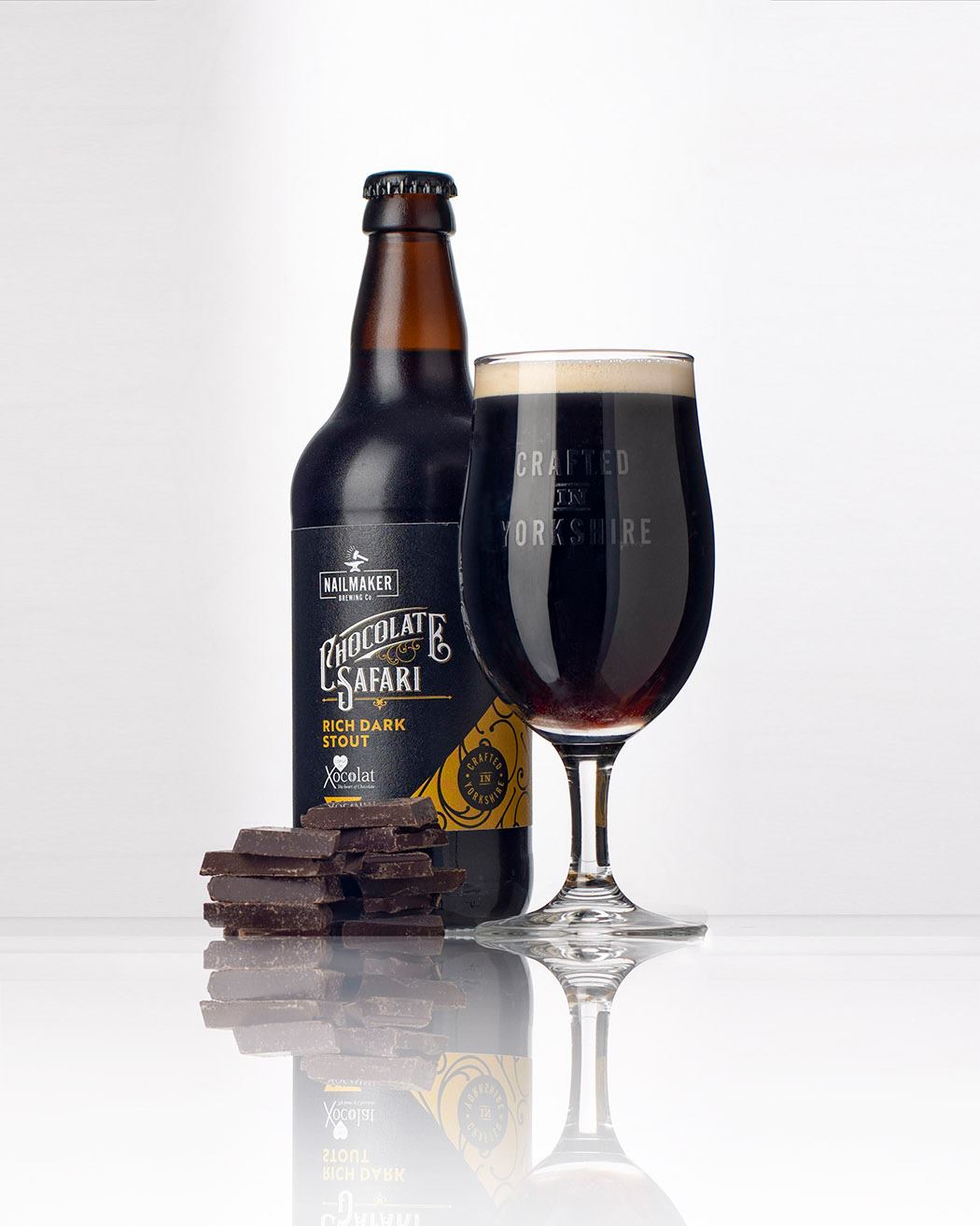
Dark beers can offer roasted, coffee, caramel and chocolate-like malt characteristics, while darker chocolates can carry similarly deep roasted and bitter flavours.
That gives us plenty of opportunities for complementary pairing.
But intensity matters.
Put a delicate 60% chocolate next to a massive imperial stout and the chocolate may disappear completely.
Put an intensely bitter chocolate beside a dry, heavily roasted stout and you may simply amplify bitterness until your mouth waves a white flag.
Try matching weight with weight.
A smoother porter can be wonderful with a dark milk chocolate.
A richer stout can handle something more intense.
And if there's coffee, caramel, hazelnut or a touch of salt involved, things become even more interesting.
Try:
Dark chocolate + stout
Salted caramel + porter
Coffee ganache + imperial stout
Hazelnut praline + brown porter
Porter and Chocolate
Porter deserves more attention.
Depending on the style, you can find caramel, nutty, chocolate, toffee and roasted characteristics.
That makes it an incredibly useful beer at the chocolate table.
I often find porter more forgiving than an aggressively bitter beer because those rounded malt flavours can sit beautifully beside milk or dark chocolate.
Chocolate doesn't necessarily need to be 70%, 80% or whatever impressive number happens to be printed on the wrapper.
Percentage is not a flavour.
Taste the chocolate.
Then decide.
IPA and Chocolate: Approach with Caution
This is where people get overconfident.
IPA can work with chocolate.
But it can also be spectacularly bad.
Hop bitterness plus cacao bitterness can become exhausting. Strong citrus or resinous hop character can also trample all over a delicate chocolate.
Even experienced beer-and-food tasters acknowledge IPA as one of the trickier styles to pair successfully with chocolate.
So don't begin by asking:
What percentage chocolate goes with IPA?
Ask:
What does this particular IPA taste like?
If you've got tropical fruit, perhaps look towards chocolate with passion fruit, mango or pineapple.
If there's orange or grapefruit, consider citrus.
A little sweetness in the chocolate may soften the perceived bitterness.
Milk chocolate can sometimes be a more intelligent choice than reaching automatically for dark.
And if it doesn't work?
Pour another beer.
Lifeis short.
Wheat Beer, Witbier and White Chocolate
Now things get lighter.
Wheat beers and Belgian-style witbiers can offer citrus, spice and sometimes fruity fermentation notes.
White chocolate contains cocoa butter but no cocoa solids, so it doesn't bring the roasted cacao character of milk or dark chocolate.
Instead you've got sweetness, dairy character and that wonderful cocoa-butter melt.
That can make white chocolate very useful with lighter beers.
Think:
White chocolate + Belgian witbier
Then start playing.
Orange. Lemon. Coriander. Vanilla, Passion fruit.
Suddenly white chocolate — so often dismissed by chocolate snobs — becomes rather useful.
Belgian Ales and Milk Chocolate
Belgium understands two things extremely well.
Beer and chocolate.
I've spent plenty of time exploring both in Belgium, and this is where pairing becomes properly entertaining.
Belgian ales can offer dried fruit, spice, caramel and fermentation-derived fruit character.
Milk chocolate gives you sweetness, cocoa, dairy notes and caramelised flavours.
Instead of pairing simply by colour, start hunting for connections.
A beer suggesting dried fruit?
Try raisin or fig.
Caramel?
Try caramelised milk chocolate or praline.
Spice?
Bring in cinnamon, clove, cardamom or ginger.
This is exactly why a Chocolate and Beer Safari through Bruges or Brussels makes sense.
You're not simply eating chocolate and drinking beer.
You're tasting two traditions side by side.
And preferably not in a hurry.
Fruit Beer and Chocolate
Fruit beers offer an obvious bridge.
Belgian kriek brings cherry into the conversation.
Framboise brings raspberry.
Instead of fighting those flavours, use them.
Dark chocolate and cherry is hardly a new idea.
Neither is raspberry and chocolate.
But beer adds acidity, fermentation, aroma and carbonation, so you're getting something much more complicated than simply stuffing a raspberry inside a truffle.
Try:
Kriek + dark chocolate
Framboise + chocolate raspberry ganache
Fruit lambic + chocolate dessert
Just watch the sweetness.
If both beer and chocolate are extremely sweet, the pairing can become heavy very quickly.
Acidity is your friend.
What About Lager and Pilsner?
People often overlook lager because it doesn't shout loudly enough.
That can actually be useful.
A crisp lager or pilsner can provide refreshment and carbonation rather than attempting to compete flavour-for-flavour with the chocolate.
I'd keep the chocolate relatively approachable.
Milk chocolate. Nut praline, Caramel.
Perhaps something lightly salted.
The point isn't always to create a flavour explosion.
Sometimes you simply want two things that are pleasant together.
There's nothing wrong with that.
Five Pairings I'd Put on the Table
If I were introducing somebody to beer and chocolate pairing, I'd rather give them five genuinely different experiences than five versions of stout and dark chocolate.
I'd probably start somewhere around here:
1. Belgian witbier + white chocolate with orange
Light, creamy, citrus-led and aromatic.
2. Brown ale or porter + hazelnut praline
Nut, roast, malt and chocolate all pulling in roughly the same direction.
3. Stout + dark chocolate ganache
The classic but choose similar intensities.
4
. Kriek + cherry dark chocolate
Fruit, acidity and cacao. Easy to understand and great for demonstrating a flavour bridge.
5. Belgian dubbel + milk chocolate with caramel
Rich malt, dried-fruit character, sweetness and caramel.
Then I'd throw in one deliberately difficult pairing.
Because tasting is also about discovering why something doesn't work.
A Few Pairing Mistakes
Obsessing About Cocoa Percentage
A 70% chocolate from Madagascar may taste completely different from a 70% made with cacao from Ghana.
The number tells you part of the formulation, it doesn't tell you what the chocolate tastes like.
Assuming Dark Beer Means Dark Chocolate
Sometimes it works brilliantly.
Sometimes you get bitterness piled on roast piled on bitterness.
Taste first.
Serving Everything Too Cold
Very cold drinks can suppress aroma and flavour perception.
You don't need warm beer, but beer straight from an aggressively cold fridge may not show everything it has to offer.
Chocolate doesn't want to be fridge-cold either.
Using Too Much
You're tasting.
A small piece of chocolate and a small measure of beer are enough to examine a pairing.
More does not make your sensory analysis more accurate.
It may eventually make it considerably less accurate.
Build Your Own Beer and Chocolate Tasting
You don't need twenty beers and an encyclopaedia of chocolate.
Four or five of each is plenty.
Choose contrasting beer styles.
Perhaps:
Witbier
Pale or amber ale
Porter
Stout
Fruit beer
Then choose chocolates that give you different experiences:
White chocolate
Milk chocolate
Dark milk
Dark chocolate
One flavoured ganache or praline
Taste each separately first.
Write down what you notice.
Then start pairing.
Give each combination a simple score.
Works.
Interesting.
Absolutely not.
Don't worry about being wrong.
There isn't a bloke in Belgium waiting to confiscate your glass because you preferred milk chocolate with stout.
Your palate belongs to you.
The Best Pairing Is the One That Makes You Go Back for Another Taste
That's really what we're looking for.
Not a mathematical formula.
Not a chart downloaded from the internet.
Not somebody telling you that 72.4% cacao must be consumed alongside a beer with precisely the correct bitterness.
We're looking for that moment when the beer changes the chocolate and the chocolate changes the beer.
You taste one.
Then the other.
Then you go back because something happened that you weren't expecting.
That's pairing.
And after years working with chocolate, that's still the part that interests me.
There is always another flavour hiding somewhere.
You just have to taste properly enough to find it.
Want to explore it for yourself?
Coeur de Xocolat runs Chocolate and Craft Beer Pairing experiences for private groups, corporate events and celebrations.
And if you really want to take things seriously, join me on a Chocolate and Beer Safari® in Bruges or Brussels, exploring two of Belgium's greatest traditions where they belong.
Prefer experimenting at home?
Have a look at my beer and chocolate recipes and start playing.
Just remember:
Taste the beer.
Taste the chocolate.
Then forget the rules and see what happens.
Fancy organing your own tasting for friends or as a fundraiser Look here
Try some of my recipes using beer and chocolate